Thursday, 24 August 2017

Varamon Beach, Motala

DSC01424

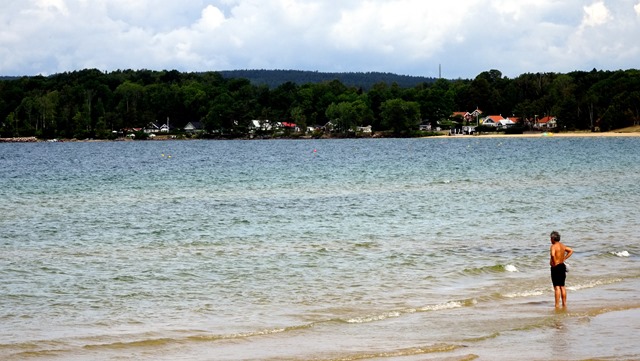
This sandy beach along Lake Vättern at Motala is 5 km long (i.e. over 3 English miles), which makes it the longest inland lake beach in Sweden. We just made a short stop here to have a look (because I wanted to see it); on our way to other destinations. This was around 11 a.m. on a Saturday morning, and although sunny, not exactly warm. My guess is that if the weather kept sunny, there were probably more people in the afternoon.

DSC01422

DSC01423

DSC01425

DSC01426

DSC01427

DSC01428

DSC01429

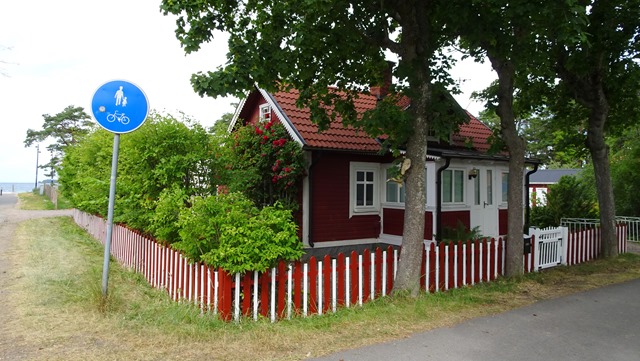
There are also many summer cottages in the neighbourhood. My camera eye was drawn to this little red one because of its “polkagris”-striped fence. (polkagris = traditional Swedish red/white striped peppermint rock candy)


SkyWatch Friday

Monday, 21 August 2017

Locks at Borenshult 2 - Video Clips


Managed to find the video clips...
 Now remains to be seen if I'm also able to blog them!


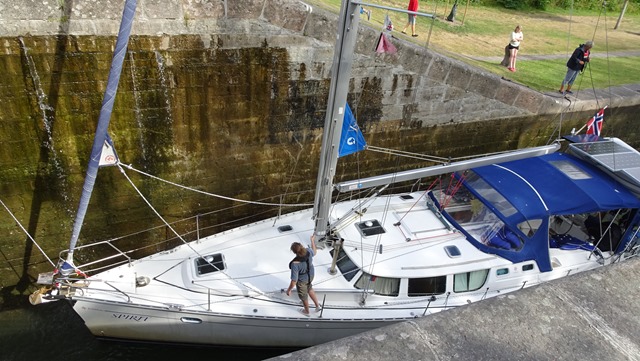
1. Boat going into a lock
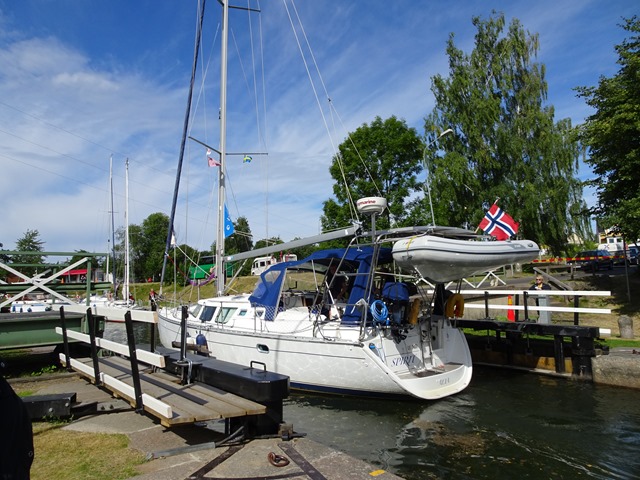
2. The sliding bridge


Göta Kanal – Locks at Borenshult

I have blogged about Göta Kanal and its locks before - for example two years ago, from Trollhättan.

“Göta Canal was constructed in the early 19th century to connect lakes and rivers from Göteborg (Gothenburg) on the west coast all the way to Söderköping on the east coast. The construction of the Göta Canal, finished in 1832, was by far the greatest civil engineering project ever undertaken in Sweden up to that time; requiring 22 years of effort by more than 58,000 workers.”

image

East of Motala, at Borenshult, Lake Vättern is connected to Lake Boren, with a steep “staircase” of five interconnected locks with a total height difference of more than 15 meters; built between 1823 to 1825.

We went to see these locks in the morning of the third day of our trip (29 July; after having stayed the night at a hotel in Motala).

DSC01388

Motala seemed a little reluctant to let us go… Winking smile
Drawbridge over the canal opening up for boats to pass.

DSC01390

DSC01391

This bridge still manually manouvered from a cabin by the bridge.

DSC01393

On our way to the locks, we also made a quick stop at Charlottenborg, a manor house from the mid 17th century situated by Motala River; now housing Motala Museum. We were there too early in the morning for the museum to be open yet, so just went for a whort walk around the house and looked at the views.

DSC01395

DSC01394

By the time we arrived at the locks, it had stopped raining. And as there were boats on their way up the locks, we stayed around a while to follow the process.

DSC01397

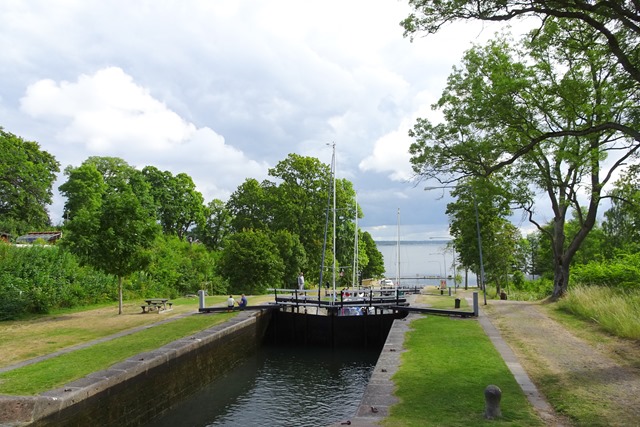
Lock filled with water. You can see the masts of boats waiting in the one below to go up.
DSC01399

Water level being lowered in the upper lock.

DSC01400

Looking in the direction the boats will be going.

DSC01401

Water level now even with the next lock, gates opening.
DSC01402

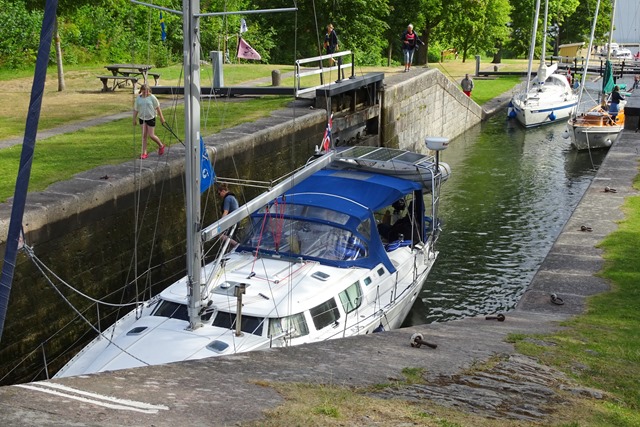
A lot of manouvering required to get the boats in place.

DSC01403

DSC01404

DSC01405

Then the water level can be raised again, to lift the boats to the next level.
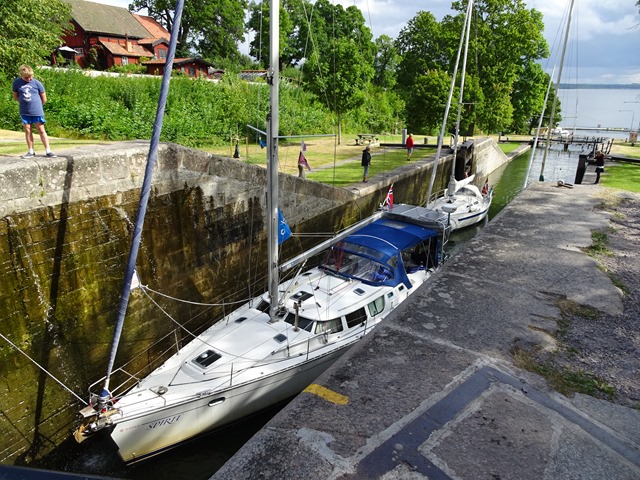
DSC01406

DSC01407
I crossed over to the other side of the canal for a look while the bridge was still in place.

DSC01409

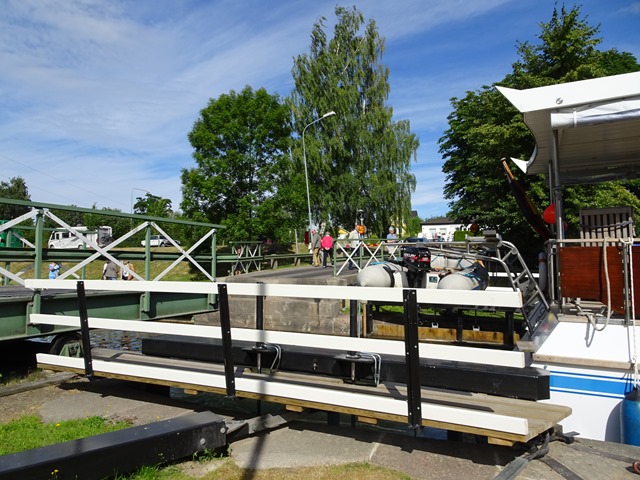
There is a type of drawbridge here that we had never seen before. It neither goes up, nor swings sideways, but just slides back on top of the road.
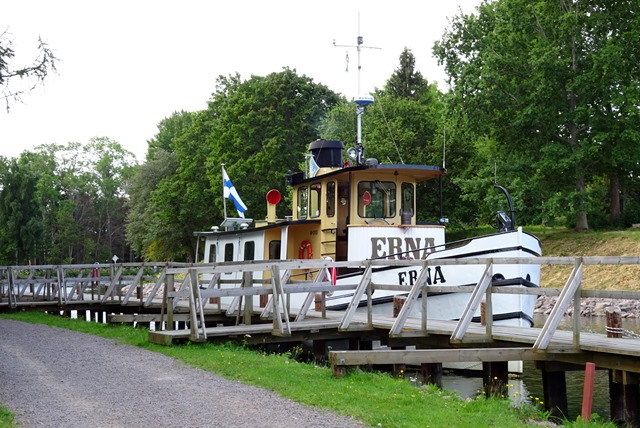
DSC01410

Waiting on the other side of the bridge, for their turn to go down the locks.

DSC01411 DSC01412

DSC01414

DSC01416

Here we go – the bridge has magically opened.
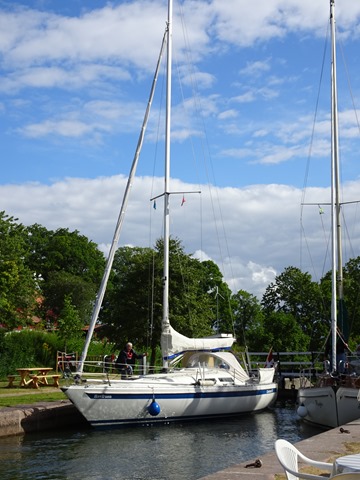
DSC01415

DSC01417

And when the boats going up have passed through,
then come those who have been waiting to go down.

DSC01418

DSC01419

DSC01420

Bridge closing again, after the last boat going through.
(Meanwhile, cars queueing on both sides of the canal.)


I tried to film the sliding bridge as well – but had trouble getting the video to show on the computer. Now I have found it, and will try to put it into a separate blog post. Hope you’ll be able to see it as well.

Through My Lens


Saturday, 19 August 2017

Vadstena Abbey Church

170728-07 Vadstena klosterkyrkan15

Vadstena Abbey Church, also called The Blue Church, from 1430.

DSC01334-001

It’s hard to give an idea how huge this church is.
I also don’t know what everything inside is.
All one can do is really to wander around in amazement!

170728-07 Vadstena klosterkyrkan16

DSC01336
St James’s (the Great) Pilgrim’s altar

DSC01339

Monument of Duke Magnus
”Magnus, Duke of Östergötland (1542-1595), was the son of King Gustav Vasa and Queen Margareta Leijonhufvud. At times he lived at Vadstena Castle. The monument has been attributed to the castle constructor Hans Fleming.”

170728-07 Vadstena  klosterkyrkan20

The sculpture on the right is said to be of John the Baptist,
made in Lübeck around 1430.

170728-07 Vadstena klosterkyrkan19

“St Anne, Virgin and Child”
(St Anne = the mother of Mary)
Made in Lübeck around 1425

DSC01344

170728-07 Vadstena klosterkyrkan18

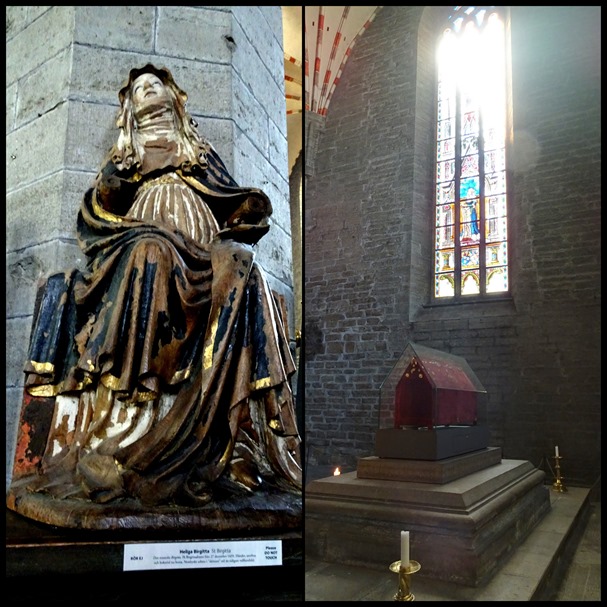
Left: Sculpture of Saint Birgitta, from 1435 or earlier.
Right: The red casket contains “Relics of Saint Birgitta and other unknown saints”.

170728-07 Vadstena klosterkyrkan17

DSC01353

DSC01356

DSC01360

My guess is that this candle holder is one of the more modern objects in the church. ‘Tealights’ are used in it, which they probably didn’t have back in medeival times!

Related Posts Plugin for WordPress, Blogger...