Showing posts with label Lake Vättern. Show all posts

Sunday, 17 August 2025

Road Trip 2025 (1) - Lake Vättern


From Google Maps

The map shows main roads and towns involved in our road trip. We started from Borås on Saturday, 9 August and drove to Linköping, where we stayed two nights. On Monday the 11th, we drove from there down to Västervik on the east coast, where we stayed one night. On Tuesday the 12th, we drove from Västervik via Vimmerby to Eksjö, where we stayed one night. And on the 13th from there back to Borås. 

Of course we also made various stops along the way - both planned and unplanned...


Saturday, 9 August - Part 1
Lake Vättern and Brahehus Castle Ruin

I think we left Borås around 11 AM or so, and then drove straight on past Jönköping (where there were a lot of roadworks going on, causing some boring queues). Our first stop was at a motel between Jönköping and Gränna, overlooking Lake Vättern. We've been there before, so knew it was a good place to stop for lunch.

View from Motell Vätterleden, overlooking Lake Vättern
 

Next, we also made a stop just after Gränna, at Brahehus Castle Ruin. We'd been there before, but remembered the views from there as well worth seeing again.
 
Brahehus Castle Ruin near Gränna


"The ruins of Brahehus Castle are located 3 km (2 mi) outside of Gränna in the province of Småland, Sweden. The ruins sit 270 m (890 ft) above sea level and 180 m (590 ft) above the lake Vättern, providing a panoramic view of the lake and the island of Visingsö. Built for and named after Count Per Brahe the Younger (a 17th century Swedish statesman and writer) in the 1640s, the castle was abandoned by the 1680s and suffered a fire in 1708. The castle is near the modern E4 highway and is a popular destination for recreation and tourism."
 
Vättern is the second-largest lake in Sweden, and the sixth-largest lake in Europe. 


Linking to:
 
Through My Lens 

Sunday, 22 October 2017

Inspired Sunday – Habo Church

DSC01676-001

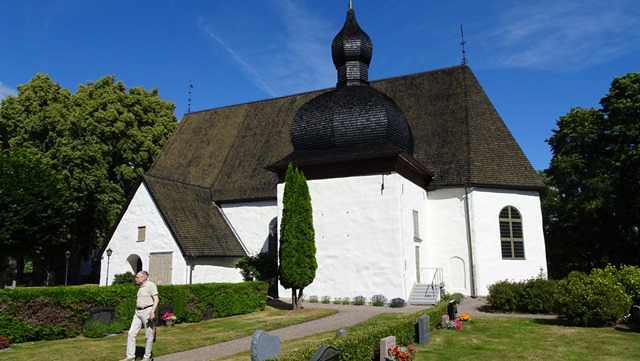
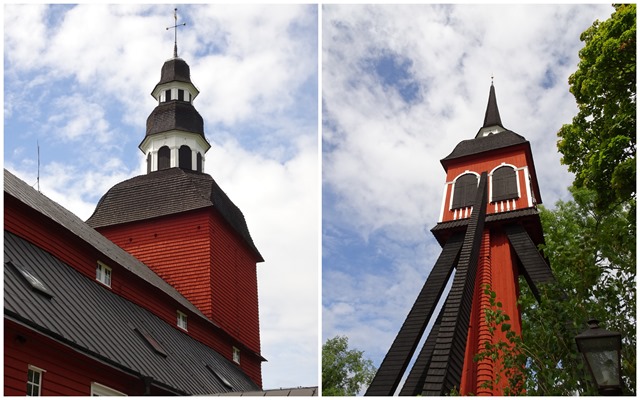
Yet another old red wooden church from our trip around Lake Vättern back in July: Habo Church.

This church also goes by the name of “The Wooden Cathedral”. The architecture resembles that of a cathedral, but it is built entirely of wood. It has the form of a basilica, with a high nave and two lower side aisles. It was built in 1680, and received its present appearance in 1723. The vestry dates back to an older stone church from the 13th century. The tower on the west side of the church is only for decoration and has no bells inside. In the separate belltower from 1760, there are three bells of different size, all made in Jönköping in the mid 1700s (one of them was recast in the 1870s).

170730-06    Habo kyrka1

170730-06    Habo kyrka2

DSC01710-001

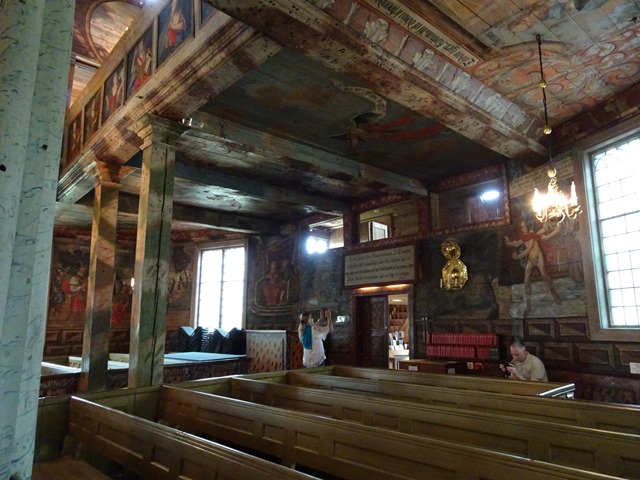
The inside of the church was decorated in 1741 – 1743 by two painters from Jönköping, Johan Kinnerus and Johan Christian Peterson. (Cf. my post last week from Brandstorp Church, another of the old wooden churches in this area.)  It’s a real challenge for an amateur photographer to do justice to!

The paintings in this church cover the walls as well as the ceiling, and are illustrations to Martin Luther’s Cathecism. Besides the common themes of the crucifixion and resurrection there are paintings representing the ten commandments, and church rituals like baptism, confession, communion, the Lord’s Prayer, and the Old Testament blessing.

DSC01691

The architecture of the church reflects the old class society from previous centuries. The rich landowners had their own boxes (six of them, on both sides of the altar at the front) to separate them from the lower classes. (They even had their own entrance to the church.) The farmers sat in the pews in the front of the church; the poorer crofters at the back; and the upstairs galleries along the sides were for farm-hands and servants.

DSC01685

The pulpit was made in 1723 and is decorated with sculptures of Jesus and the twelve apostles.

170730-06    Habo kyrka5

DSC01694

170730-06    Habo kyrka3

The altar is made of sandstone and is from the 1300s. In a restoration of the church in the 1700s, a shrine was found inside the altar, and inside it a piece of parchment which stated that the altar had been consecrated by a bishop in the mid 1300s.

DSC01686-001

The clock included in the altarpiece is unique. It was built in Jönköping in 1750 and only has an hour-hand. The clock can be heard ticking in the church and every half-hour the boy on top strikes a bell with his hammers.

DSC01697

The front of the organ is from the original organ built in 1736.

DSC01706

DSC01692

From the back of the church (beneath the organ)

DSC01689

All the pews are decorated, too.

DSC01701

The baptismal font made of sandstone is the oldest object in the church and dates back to the mid 12th century. Back in those days, babies were immersed in the font when they were baptised. The water used in the basin was let out through a hole at the bottom.


170730-06    Habo kyrka6

The medeival stone sacristy is nowadays a prayer/meditation room.

The church is still a “living” church and not just a museum. Services are held here most Sundays. But the church is also kept open daytime on weekdays throughout the year for visitors.


InSPIREd Sunday

Sunday, 24 September 2017

Inspired Sunday - Norra Fågelås Church

As hinted at in my last post from Hjo, from there we continued driving south along Lake Vättern, back down to Jönköping. On the way, we stopped at four old countryside churches. The first was Norra Fågelås (norra=north), only about 5 km south of Hjo.

170730-03 Norra Fågelås kyrka

There has probably been a church here since back in the 12th century. The first document mentioning the church is from 1225. Some of the walls are supposed to be from the original church. The building has been reconstructed and repaired several times over the centuries, though.

DSC01633

DSC01634

DSC01638

The wooden bell tower was added in the 1300s. Originally, the tower was probably of a more open construction.

DSC01639

DSC01641

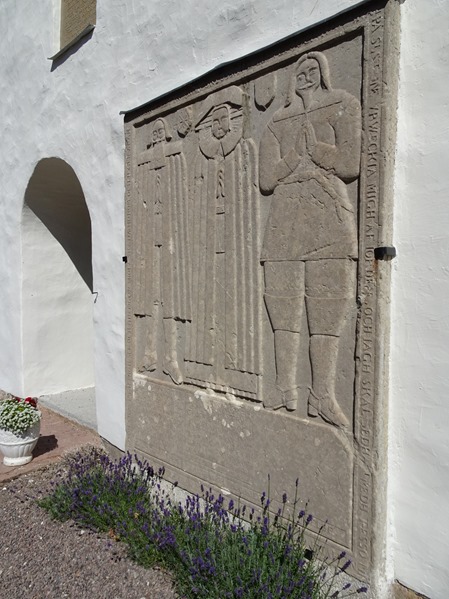
Walking around the church, we noticed this sculptured stone slab in the wall. I haven’t found any info on it online, but my guess is that it may once have been set in the floor indoors, as a funeral/memorial slab. (It was common in medeival times for the most wealthy and important families to have their graves within the church rather than in the graveyard.) This church wasn’t open when we were there, so we could not go inside.

 DSC01643


InSPIREd Sunday

Thursday, 14 September 2017

Hjo Harbour

DSC01586

A walk around Hjo Harbour - Sunday morning, July 30.

DSC01583

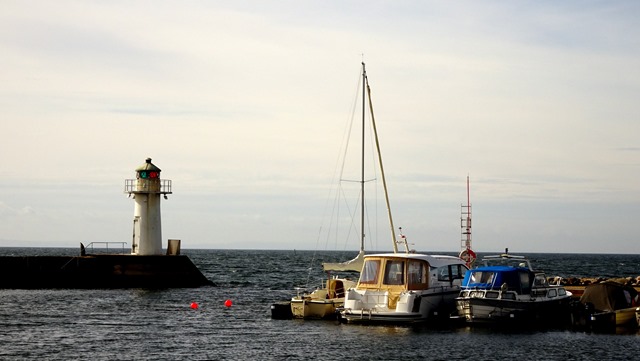
Hjo was an important harbour at Lake Vättern already back in medeival times. People as well as various merchandise were transported from here by boat across the lake, to the city of Vadstena. (See my posts from there back in August.) In population, the city never grew very big; but with the construction of the Göta Kanal in the 1800s, it once again had a commercial upswing.

DSC01587

The steamship S/S Trafik (trafik=“traffic”) is one of the oldest steamships in Sweden. It made its first tour on Lake Vättern in 1892. It had a crew of six persons and room for 250 passengers. Nowadays, it’s still used in the summer for tourist traffic.

DSC01589

DSC01590

DSC01591-001

DSC01592

DSC01595

DSC01596

Sik  [Coregonus] is one of the various kinds of fish that can be fished in Lake Vättern.

170730-01 Hjo Hamn

DSC01599


SkyWatch Friday

Saturday, 9 September 2017

Hjo – A Walk in the Park

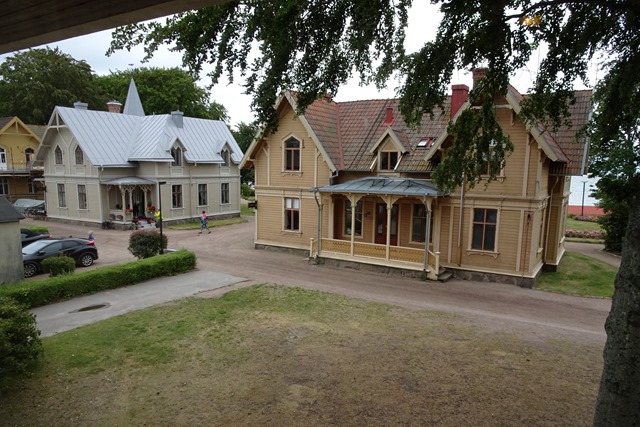
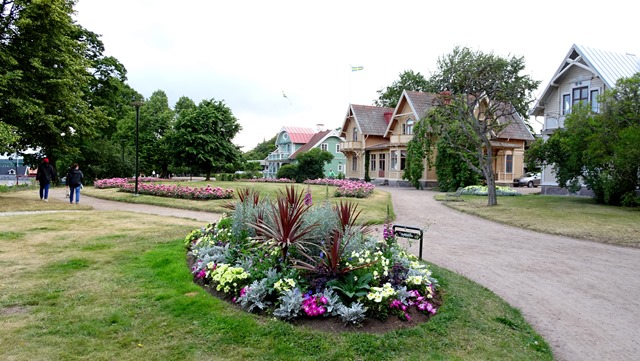
From Karlsborg (previous post), we drove on to Hjo, where we stayed the night in a hotel overlooking a park with charming old wooden houses, the beach and the lake. Undoubtedly my winner of the prize for “best hotel room view” (out of three) on this trip.

DSC01524
The view from my room. Looking left, the two houses above.
Looking right, the green house below, with lake view beyond.

DSC01525

DSC01528

Hotel Bellevue itself – keeping a low and modern profile…

DSC01565

In spite of a population of less than 10000 people, Hjo is another of those Swedish towns that for historical reasons is still referred to as a city (stad). Having received its city charter as early as in 1413, it celebrated its 600th anniversary a few years ago. For an old wooden town, Hjo has been relatively spared from fires, and the city structure is still almost exactly the same as in medieval times. The name “Hjo” (also the name of the river flowing through the town) is supposed to derive from a word meaning “muddy”. In 1876, a health spa resort was also founded here, including both drinking mineral water and having mud-baths. The park along the lake and the wooden houses were part of the spa resort.

When we arrived in Hjo (Saturday evening, July 29), it had stopped raining. There was still quite a chilly wind blowing, but after having got ourselves installed in our rooms, we went for a little walk in the park among the old houses to stretch our legs, and have a look at the surroundings.  We did not have to go very far, as the park was right outside the hotel.

DSC01560

DSC01531

DSC01532

DSC01533

DSC01535


DSC01537

 DSC01538

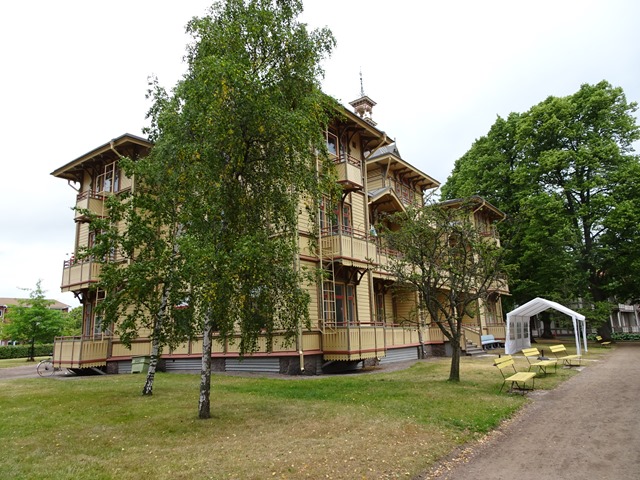
The old wooden buildings belongong to the old spa resort have women’s names that were popular in the late 19th century, and perhaps also with a certain nationalistic romantic ring to them (typical of that era, too). I didn’t spot all the names, but two that I caught on camera are “Svea” (meaning “Swedish”) and “Eira” (looking it up now, I find it refers  to an old Norse goddess “Eir”, to do with healing).

DSC01538-001 

DSC01539

DSC01540

DSC01540-001

DSC01541

DSC01544

DSC01545

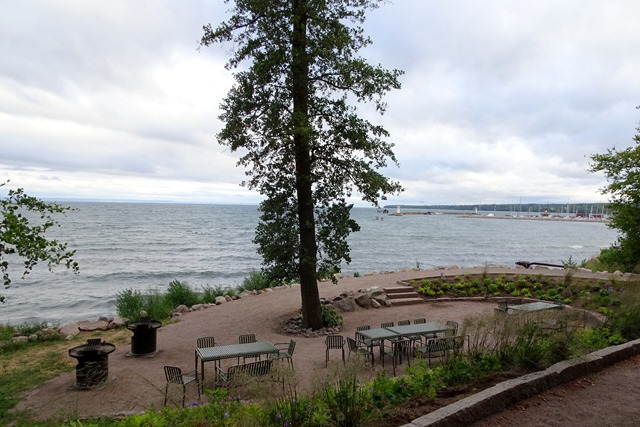
Lovely place for a picnic – in the right weather…

DSC01550

Zooming in the view towards the harbour…

DSC01548

DSC01554

DSC01556

…. and the beach with charming old wooden bathing huts.

DSC01558

DSC01559

DSC01529


SkyWatch Friday

Friday My Town Shoot Out

Related Posts Plugin for WordPress, Blogger...