Showing posts with label MosaicMonday. Show all posts

Sunday, 17 April 2016

Textile Power

Last weekend I went to visit our Textile Museum - as I do now and then. It's been three years since they moved to new premises, and they've had a number of different exhibitions since then, but it's taken them all this time to get the basic one with all the old heavy textile industry machines re-opened. In the old premises, the machines were all gathered in one huge hall, very high in ceiling. While that did perhaps give an impression of what it might have been like to work in such a place, at the same time it was hard for visitors to get an overview of all the steps in the manufacture. 


In the new exhibition, entitled Textile Power, they have chosen to display machines in a more logical order so that you can better follow the process, from the first steps in refining the fibres, to the final products. 


Various machines combing and spinning the cotton into thinner and thinner threads.


This is a jacquard loom, weaving patterened ribbons using a technique involving punch-cards that was sort of a predecessor to computer technology.


This is a knitting machine which at the end of the process spits out a complete glove with five fingers. 


Seeing these patterns displayed reminded me of my mum, because she used to sew most of our clothes at home herself, back in my childhood and youth


The exhibition also spotlights the conditions for the textile workers in the factories, and how much our whole society and industry has changed in the last hundred+ years. It is easy to forget that only about a century ago, most factory workers in Sweden were still living and working in conditions not all that different from the present-day countries where, in fact, most of the production now takes place - i.e. mostly in Asia. (Low wages, long hours, large families in crowded living quarters etc.)

Borås is still a town with a strong textile focus, and home to various businesses to do with fashion, design and clothes. We have the Textile Museum and also a Textile College; and various companies working with fashion design and smart textile inventions for the future; and shops and mailorder companies selling lots of clothes. But nowadays not much of the actual production takes place here. That has all been moved abroad to far-away places where workers are still living in conditions no longer regarded as acceptable in Sweden... The exhibition at the museum reminds us of that.


Collage52

Once upon a time, the colour of the water in the river running through this town would shift from day to day, depending on what pigments they were using in the dyeing works at the moment. Nowadays, our river has been cleaned from the old toxic substances from the dyeing industry. A couple of years ago, when a new walk was opened along a part of the river near one such place, as a reminder, they installed lights there that can shift colour. (I wonder if future generations will remember the reason?) 


At the museum, they also had this display of A Teenager's Wardrobe from 1950, 1980 and 2010. Another powerful reminder of how consumption has increased. Born in 1955 myself, I can relate to this. I have a lot more clothes and shoes now than I did back around 1980. (And it's not because of never getting rid of old things.)

At another station in the exhibition, visitors are asked to look at the labels in their clothes to check where they were made. It was not very practical for me to do that just then and there - but I gave it some thought when I got home. The only item I had on that was actually made in Sweden was my socks...


In this recent photo, I'm wearing leggings and skirt made in China, and t-shirt and sweater made in Bangladesh... An inspection of my wardrobe showed the majority of my clothes to have been made in those two countries + India. (Not really surprised, but have to confess I've never really given it much thought.)

Yesterday, I went shopping for a (rain)coat. The one I fell for and bought was neither cheap, nor on sale; and for a change it's from Denmark. Well - er - at least the label says "Danish design and fine processing", and also claims to meet "high ethical standards and health requirements"... Whether that actually means it was made in Denmark, I can't tell from the labels... Really, being a "conscious consumer" is not made easy!!!


(herluf-design.dk)


Anyway, besides being water repelleant and breathable and washable... this coat is also reversible! Which means it can be turned inside out and worn that way instead (mauve outside and dark purple inside), still with pockets and buttons etc in the right places. So it's really two coats in one. I love that, and also the flexible collar, which can also be pulled up over your head and used as a hood. It really is a very smart design. So I hope I'll be able to use it for several years to come.

 
The exhibition really did set me thinking a lot about these topics. If only it were as simple as paying a bit more for a certain item and knowing the money would end up in the right pocket. Or buying less, and be sure that this would improve the environment... But it's never quite that easy - is it...?


Instead, it's all more like this room in the exhibition, where they had turned the manufacturer's office into a giant board game... Two steps forward, three steps back etc.


Now I'm curious to know what you think....
For example:
How has your wardrobe changed over the years?
Do you buy things on impulse, or do you plan your purchases carefully?

And do you check labels to see where things were made??

Through My Lens

Mosaic Monday
 

Monday, 22 February 2016

Rörstrand Porcelain Museum (Lidköping)

CIMG5666

(July 2015)

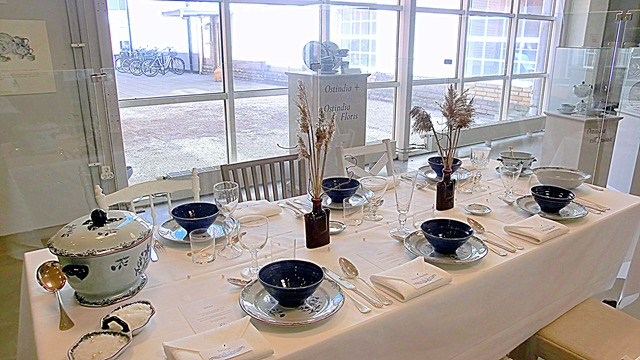
In Lidköping by Vänern we had lunch at the Rörstrand Porcelain Museum. Even if our table in their café was not laid out as elegantly as this one in the museum, it was still a very nice place to have lunch.

Rörstrand is one of the most famous Swedish porcelain manufacturers; initially founded in Stockholm; in the 1930’s, they moved to Lidköping. Nowadays the company has been taken over by Finnish Iittala, production has been moved abroad and the factory in Lidköping closed down. But the museum is still there to enjoy – and entrance is free.

2015-07-22_4  Rörstrand

2015-07-22_4  Rörstrand1

2015-07-22_4  Rörstrand2

CIMG5664

CIMG5663

Many of Rörstrand’s classic tableware patterns are very well known in Sweden. Some of them have a long history, going back 100 years or more; and some patterns taken out of production for a while have proved so popular that they were reintroduced again later.

One of those is ‘Green Anna’, first created around the turn of the century 1900. It was out of production between 1943-1966; but then reintroduced on the market again until 2002. I myself chose this series to collect when I first moved away from home to live on my own in the mid 1970’s. I have dinner plates, soup plates, and side plates in this pattern, and also the teacups which you can see here. The plates I’m still using almost daily. The teacups are not my favourite design to hold and drink from though, so they don’t get used very often now (as I have others that I prefer).

CIMG7933

CIMG7934

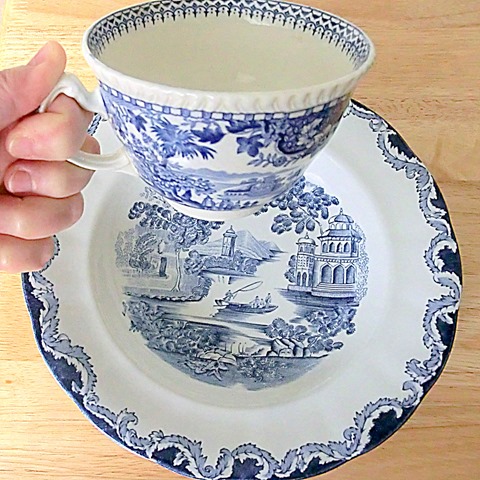
My paternal grandmother’s everyday tableware (she got married in 1930, so probably bought around then) was another Rörstrand design, Bengali Blue (which I did not see in the museum).

CIMG7927 

CIMG7929

When we cleared out my parents’ house, I found the soup plates from this series to still be in good condition (obviously not having been used much, compared to the flat ones that were used all the time and got well worn and cracked over the years). So I  kept those – and I’m glad I did. While I find them rather too flat for soup (my Green Anna ones are better for that purpose– deeper and more bowl-shaped), these are just perfect for my “TV dinners” (salad etc).

They also match my grandmother’s teacups rather well…

 CIMG7939 

CIMG7935

But the teacups and saucers are of a different make, and from England!

CIMG7936


Linking to Mosaic Monday

Monday, 14 September 2015

Mosaic Monday

2015-09-14 Windows 10 update2

Today has been mostly about waiting patiently (and rather nervously, because of some recent glitches in the internet connction). The upgrade to Windows 10 took about 5½ hours, but seems to have been successful.

I took the precaution of leaving my other “smart” devices OFF in the meantime, and especially the new TV, as I kind of suspect that the router may have got a bit bewildered by that recent addition to the digital equipment. Anyway, giving the computer priority while doing the dreaded update seems to have been appreciated, as the process was at least not interrupted by any breaks in the basic internet connection. Phew!

CIMG6396

This gorilla is a kind of mosaic in itself – made from pieces of cardboard boxes by artist Laurence Vallières.

It was created in the Orangery in the town park (above) during the street art festival, but afterwards moved to a new home in the large entrance hall of the Textile Fashion Center (below).

Gorilla NoLimit

In the background the colourful entrance to the Textile Museum – also a kind of patchwork (textile) mosaic.

Gorilla NoLimit

In spite of the lack of greenery just nearby, the gorilla does not seem too displeased with its new surroundings.

Linking to Mosaic Monday & Through My Lens

Monday, 7 September 2015

Hang On

There’s been so much going on this past week that I’ve really had no time (or energy) left to catch up with blogging. Street art festival in town; more belated birthday celebrations, including a major technical home makeover this weekend (new TV and audio system and on top of that a new printer/scanner); and in the midst of it all (on Thursday) a friend’s funeral. (Add to that the chaos in the World that unavoidably comes streaming over us with every newscast; and sorting out one’s own thoughts and feelings about Everything gets even harder.)

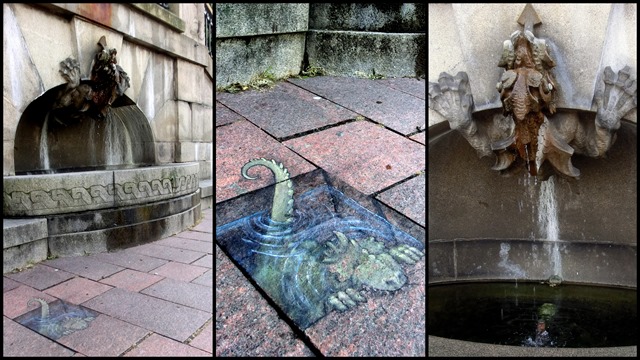
For now, I’ll just post this, following up on a promise made in my previous post: The finished street painting that I got to watch David Zinn sketch last Wednesday – and the fountain nearby that inspired it.

2015-09-04 David Zinn dragonx3

I suppose it’s possible that the challenge of painting street art in very moody and rainy weather may have had something to do with it as well, though –

“just clench your teeth and get on with it”, perhaps?? Winking smile

Linking to: Mosaic Monday & Through My Lens

Monday, 10 August 2015

The Journey is the Goal – Trollhättan (1)

2015-07-20 thejourneyisthegoal

It’s amazing how long you can make a short holiday trip last, if only you make enough photo stops. (In case you feel you’ve lost track: After two weeks of blogging about it, I’m still only on Day 1 out of 4…)

If our aim had been just to drive straight from where I live to the town where we were to stay the next two nights, we could have done so in about 1½ hour. With all the various stops we made along the way, however, we took about 8 hours getting there…

Map picture

Trollhättan is situated on the river Göta älv. The steep water falls here used to be a huge obstacle for boats travelling the river between Gothenburg and Lake Vänern, until a lock system was built in the 19th century (the present locks still dating from 1916). In the late 19th century, the waterfalls were also “tamed” to produce hydropower, and to make the town a centre for heavy industries as well as for a national energy corporation.

Nowadays, the water is usually only let out into the falls for a few minutes daily in the summer season, as a tourist attraction.

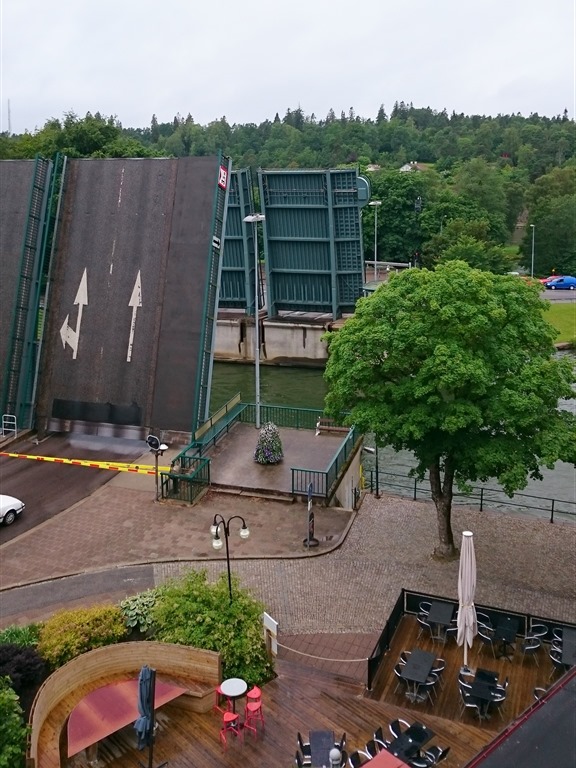
The first view I’ll show you, however, will be the one from my hotel room – which overlooked the bascule bridge across the river/canal:

2015-07-20--21 klaffbron

CIMG5461-001

My room was on the top floor to the left above the restaurant.

zDSC_0226-001

zDSC_0227-001

Linking to Mosaic Monday and Through My Lens

Monday, 27 July 2015

Mosaic Monday – Alingsås (2)

2015-07-20 Christinae kyrka 1

CIMG5158-001

CIMG5160-001

CIMG5162-001

CIMG5161-001

This church in Alingsås, Christinae kyrka, was built between 1642-1651 and named after the Christina who was Queen of Sweden around that time; and who donated money to have this church built.

An interesting fact about Christina in this context is that in 1654, she abdicated the throne, converted to Roman Catholicism and moved to Rome. (The Church of Sweden has been Lutheran since the mid 1500s.)

The rounded parish house (seen to the left of the church in the bottom photos of the collage) was added in 2003.

Monday, 13 July 2015

Mosaic Monday: Siskins

2015-07-11 Grönsiska St Birgitta

2015-07-11 Grönsiska St Birgitta1

CIMG5098

CIMG5096

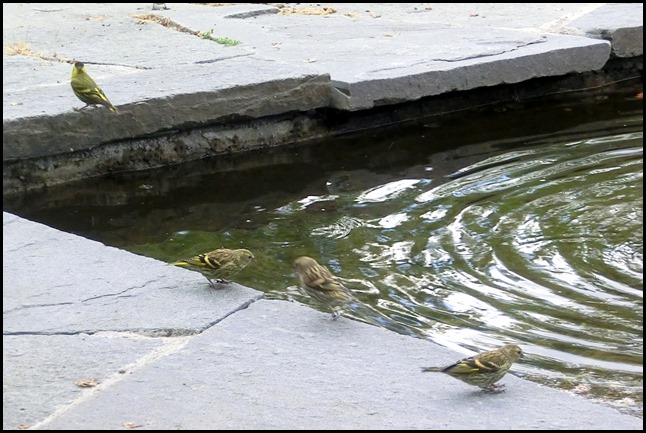
“Hey, there’s water down there, but how on earth does one reach it?”

CIMG5088

On Saturday afternoon, on my way back from town, I sat for a while to rest by the fountain in the old cemetery. While I was sitting there, a whole flock of these birds came swooshing down to explore. They were very small, and kept their distance (to me) and did not sit still for long. My first thought was “sparrows” but then I noticed how colourful they were. So I just kept zooming in and taking lots of pictures, hoping some would come out good enough for me to compare with my bird book when I got home.

When I did, I arrived at the conclusion they must be

European siskin – Grönsiska
(Carduelis spinus / Spinus spinus)

Quite common here in southern Sweden according to the book (and Wiki) but I can’t remember seeing them before. Maybe they were just travelling through… They were still there on Sunday morning, though. Not at the fountain, but elsewhere around the cemetery. We were back to rainy weather again then, but I went for a walk around the cemetery anyway.

Related Posts Plugin for WordPress, Blogger...