On Tuesday I decided to make use of another fine 'late summer' day for a visit to our open air museum park with old buildings reminding of the history of this area (not just Borås city, but also the surrounding countryside). With the covid situation, it's been at least two years since I was there last, I think.
Since my 2nd covid jab (end of June), I'm feeling a little bolder about using the bus again. I took the same bus as on Monday (the one that continues out to the big lake), but only a few stops this time. That saves me the most boring part of the walk (and with the most traffic).
I had checked the museum's opening hours online, and had got the impression that they were still offering some guided tours this week. But it turned out they did not, as the main tourist season is considered over (schools open again since 1-2 weeks). However, the member of staff who I asked about it (a young girl in her twenties or so) said that if there was any building I wanted to have a closer look at she'd be happy to open up and give me a little info anyway. As she added that she really had nothing special to do at the moment anyway, I took her up on her offer. So I ended up having a guided tour anyway - not of the whole park, but of some of the buildings. We also had quite an interesting chat about history and what life was like back then - long before our own times. (My contribution was some bits and pieces from my own family history research + a book I read back in spring, the diary of a man who was contemporary with my grandfather's grandfather.)
The buildings in the museum park were all collected from different places and moved to this park at the beginning of the previous century.
This is an old farm house which served as a kind of centre for "cottage industry" in
the past; a business form that was quite common around here before they
started building factories. Rich farmers and others who had a
bit of capital bought and provided the material; while poorer
people living in small cottages did the weaving and sewing etc in their own homes.
("Working from home" is far from a new idea!) And then peddlers went around
from house to house (and town markets etc), selling the finished products.
 |
The kitchen inside the farmhouse.
|
 |
Tile stove in the big dining/living room
|
The cottages where most people lived were a lot simpler than the big farm houses, though.
In this type of cottage the main living space was the low part in the middle. The lofts on the parts to the sides were used for storage + sometimes people slept up there in summer. These cottages, including the keyhole entrances were common in provinces south or south-west of here.
 |
Inside the cottage above
|
The doorway of this one is so low that I refrained from trying to crawl in for a closer look... (Not feeling all that flexible any more - if I ever was!) I just took a photo looking in:
This used to be a parish hall. (We did not go into this one either.)
In the museum's main building (above) they had a summer exhibition which included some old paintings of peddlers from the past. This used to be an inn. The ground floor here is still used as a café.
I sat down for a while and had a cup of tea and a piece of home-made pie with vanilla sauce before walking back home.
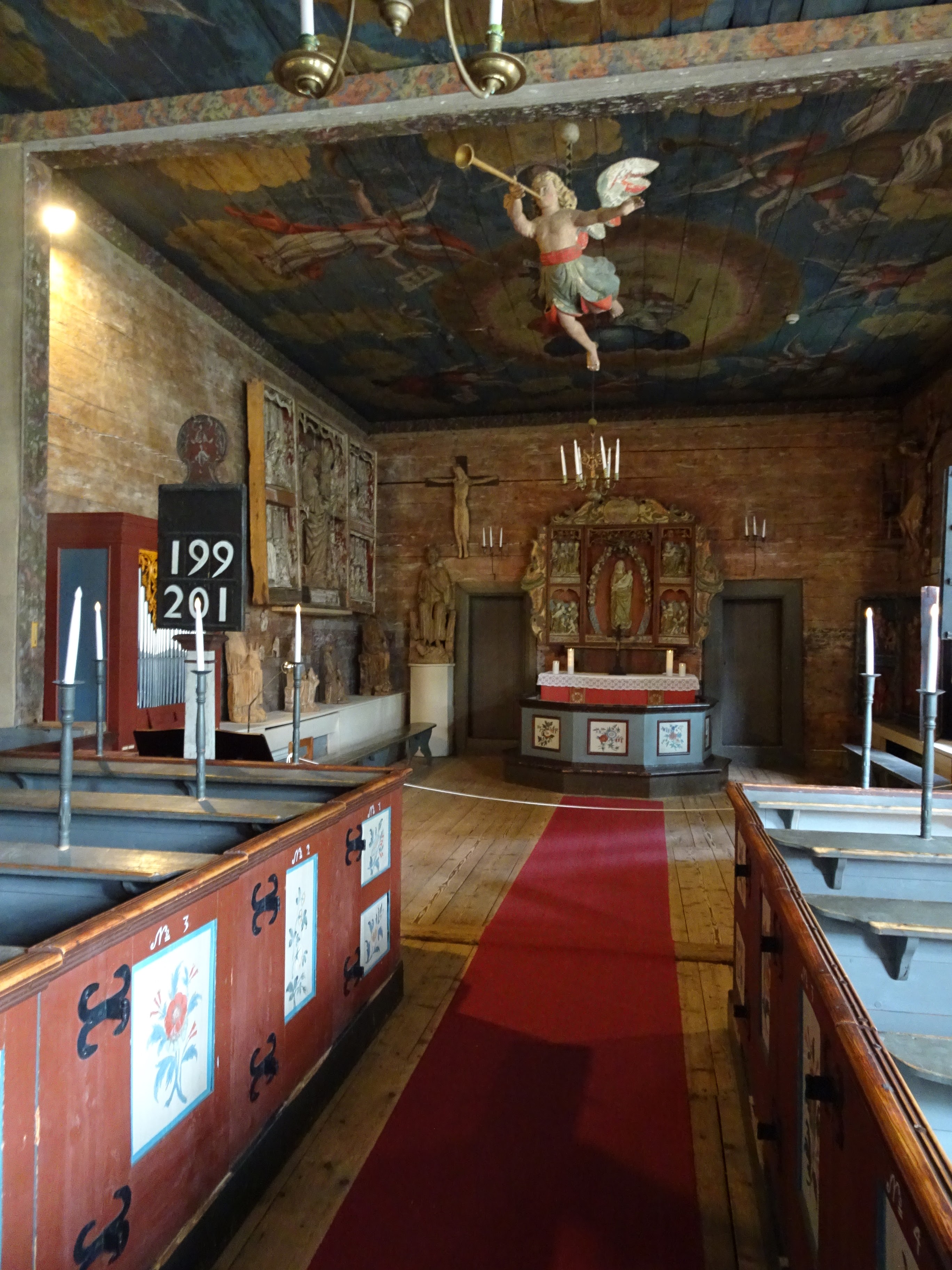
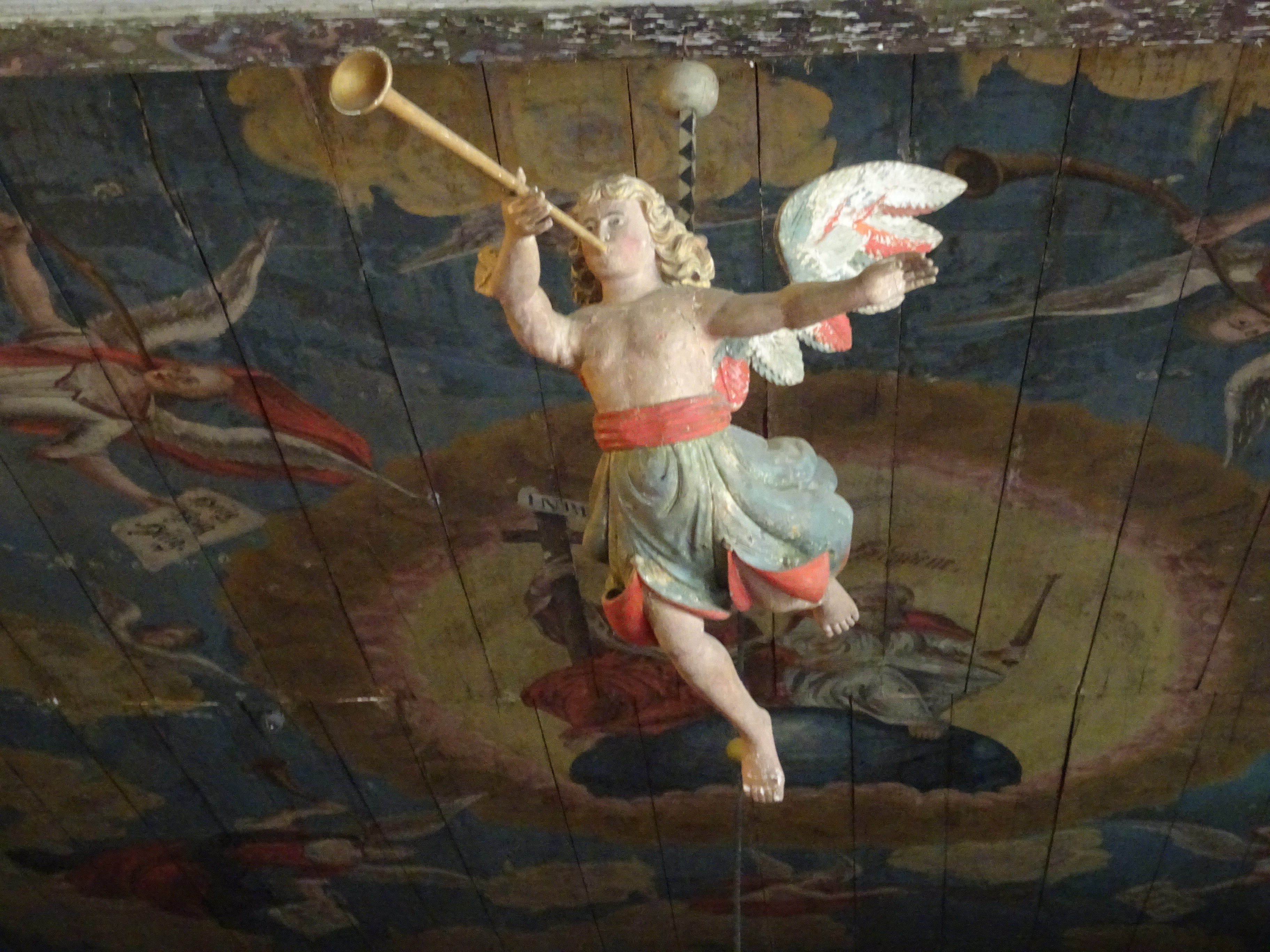
View from the café towards the church. The church was open too, and yes, I also went inside. But I think I'll save those photos for another post. :)