Showing posts with label ruins. Show all posts

Sunday, 9 September 2018

Borgholm Castle Ruin, Öland

Road Trip 2018, Part 15

DSC04033-001

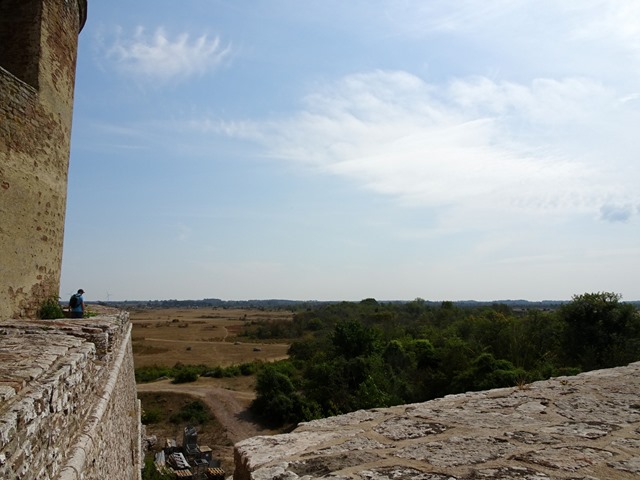
Borgholm Castle, originating from the 12th or 13th century, stands on the edge of a rocky precipice overlooking the strait of Kalmarsund. First mentionend in 1281, one of the oldest parts of the castle was a round defensive tower, from where lookouts could monitor the boat traffic. The city of Kalmar on the mainland also had its own fortifications. (We’ll be visiting Kalmar Castle in a later post.)

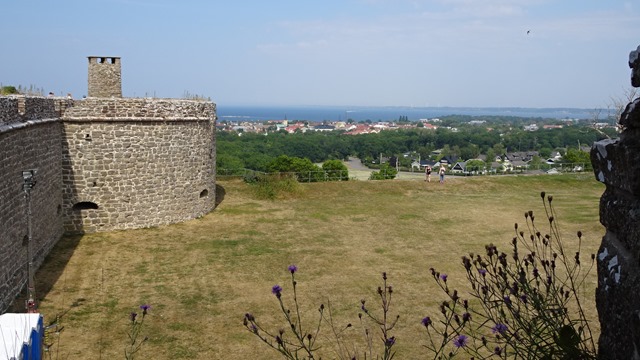
In the past, Öland was not an exclusively Swedish island. There were also Danish and German interests here, and from time to time the castle was under their control. When Gustav Vasa (Gustav I) was crowned king of Sweden in 1523, Borgholm castle lay in ruins. In the late 1500s, during the reign of king Johan III, it was transformed into a Renaissance castle. The old tower was restored; four wings were built around an inner courtyard; and facing inland, new defensive walls with huge bastions and platforms were added, from which every part of the castle could be protected.

In a war between Denmark and Sweden in the early 1600s, the castle again suffered serious damage. After the Peace of Roskilde in 1658, when Sweden’s border was moved further west, it lost its importance as a frontier fortress. There were plans to turn it into a baroque palace; but soon after this work was completed, it was left to again fall into decay; and in 1806 it was further destroyed by fire. In the 1880s, however, work was started to preserve the ruin and make it accessible to visitors.

What we see today is the ruins of the 17th century baroque palace; now owned and managed by the National Property Board of Sweden (Statens Fastighetsverk). It is open for visitors, and the inner courtyard is used for concerts, theater performances, and other events.

(Facts picked from a sign near the castle + Wikipedia.)

DSC03975-001

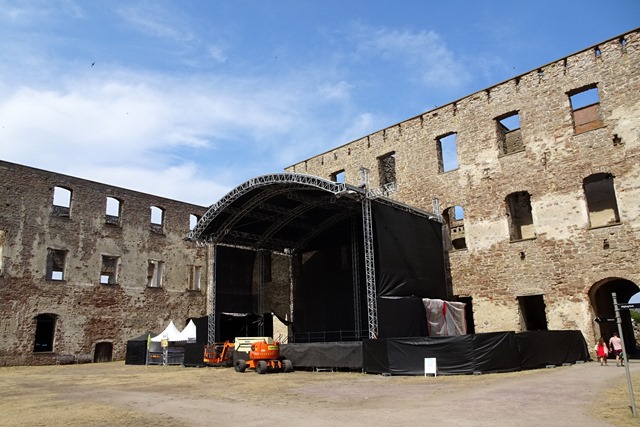
Courtyard with stage and audience gallery

DSC03976-001

DSC03978

2018-07-18-09 Borgholms slottsruin

DSC03980

DSC03981

“Upstairs”

DSC03983

DSC03982-001

DSC03987-001

DSC03988

DSC_0030_3

DSC03991

DSC03989

DSC03990

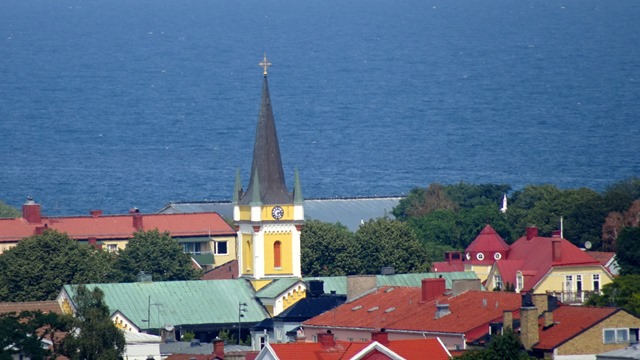
Zooming in the church tower in the town (from up on top of the castle).

…


Aerial view of the Borgholm castle ruins from 2013 ( Wikimedia Commons )


Saturday, 8 September 2018

Borgholm Harbour, Öland

Road Trip 2018, Part 14

DSC03966

DSC03965

DSC03973

DSC03971

DSC03968

DSC03967

DSC03963

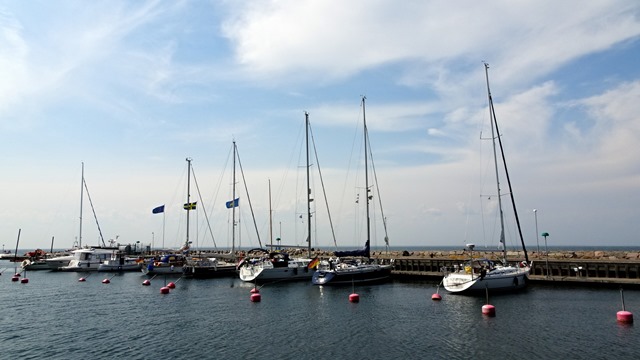
Borgholm is the main city on the island of Öland. It has only around 3000 inhabitants but attracts a lot of tourists in summer. The huge grey monstrosity of a building hovering in the background of the last photos here is the ruins of Borgholm Castle; first built in the second half of the 13th century, but destroyed in a fire in 1806. (We’ll be going there for a closer look in my next road trip post.)


Weekend Reflections

SkyWatch Friday

Saturday, 25 August 2018

Gråborg, Öland

Road Trip 2018, Part 10

DSC03903

The entrance to Gråborg, the ruins of the largest of 15 ancient strongholds on Öland. (The name can be translated The Grey Castle.) These strongholds were built between AD 300-700. Some were also restored and used in the Middle Ages. (See further info on the signs below - click on images to enlarge.)

DSC03900-001

DSC03900-002

Gråborg_-_KMB_-_16001000006894

Aerial photo from Wikipedia

The wall around the fort was around 4 meters high. The area is elliptical in shape, ~  210 x 160 meters.

DSC03904

DSC03906

Me on the inside of the gateway.

DSC03907

This was on the outside of the great wall, I think. There are lots of these kinds of stepladders next to gates on the island, as there are also sometimes cows or sheep grazing in the fields. (I feel very insecure climbing those steps when there is nothing to hold on to at the top, though! This one I did not try.)

DSC03902-001

Close to the stronghold there is also this 12th century ruin known as St Knut’s Chapel; supporting the theory that the stronghold was also in use in the Middle Ages.

St Knut or Canute IV (c. 1042 – 10 July 1086), later known as Canute the Holy, was a Danish king living in the 11th century; sanctified after his death.

DSC_0024_3

DSC_0023_2

The car park was on the other side of that barn you see in the background. When we got back there, we were met by this car which wasn’t there when we arrived:

DSC03908-001

Just struck me as rather a stark contrast to the old rural landscape around us…


Related Posts Plugin for WordPress, Blogger...