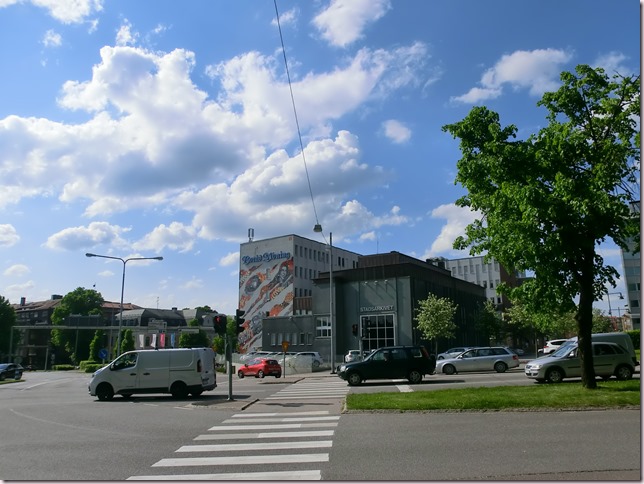
As I said in Part 1, some of the works in this year’s sculpture biennale are found in a residential district in town which is usually not much frequented by others than those who live and work there. It is one of the areas in town with a lot of immigrants. Although I’ve been in the neighbourhood sometimes, I have very rarely gone walking in among the high-rise apartment blocks before. Although within walking distance from the city center, this neighbourhood still feels like a suburb.

▲One of the new sculptures for the biennale is a white picket fence – something we normally associate with small one-family houses with their own garden here. (Untitled, by Sirous Namazi, born in Iran)
On the other hand: In among some other apartment blocks, I also found this picket fence surrounding an urban allotment site. (As far as I know, not considered a sculpture!)▼

In a park, I caught up with a guided biennale tour at this construction below – which is part of the sculpture biennale ▼

Flat Field Works (Middelheim Variant #1)
This artwork creates a space that resembles both private and public environments. The pavilion adds a new feature to the park that we can use for a moment’s rest or play, for reading a book, or as a stage. The artist often reflects on the social role of art and how artworks are experienced, both physically and psychologically. Andrea Zittel is best known for her living systems, a multifaceted exploration of what humans need for their survival. (Text from a sign nearby)
I tagged along with the guided tour to a couple of more sculptures.
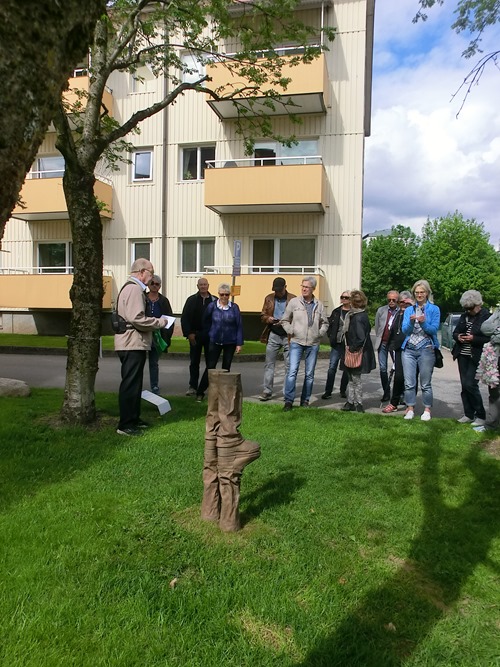

Another untitled piece by the same artist who made the white picket fence. The brochure says: “Shoes and trousers give no clues as to gender, age or ethnicity, so the missing figure remains anonymous. Thereby, we are all invited to identify with the work, and project our own story on it.” – Hmmm… (Suggestions?)

▲ More tall buildings, and in among those another sculpture, consisting of two opposite sets of stairs. ▼

These are said to resemble mosque pulpits, and by placing them opposite each other, the artist Mounira al Sohl (born in Libanon) wants to encourage dialogue rather than sermons. Every hour, there is also a song in Arabic played from the pulpits. So we all hung around for a while, awaiting that…

After that I parted from the guided group (because I was going home, and they were going back in the opposite direction). On my way, I passed by some older blocks of houses which I like for their variety of doorways:


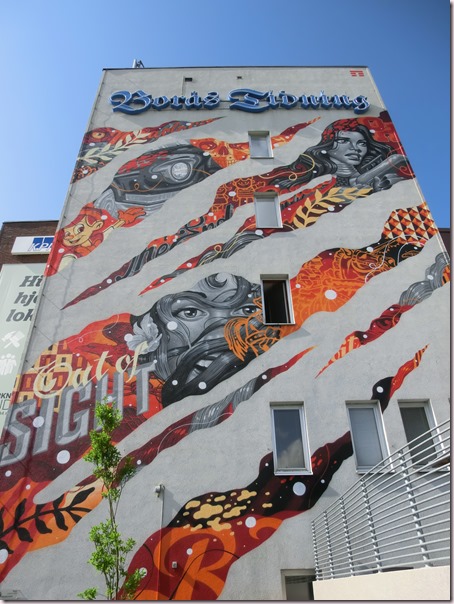
And on the other side of the street from those, there is one my favourite murals from the street art festival two years ago:

The area of town we’ve been touring in this post is to the west of the railway. Crossing over the main bridge back to the east side, I took these views. Might as well show them “while we’re here”…

(looking north)
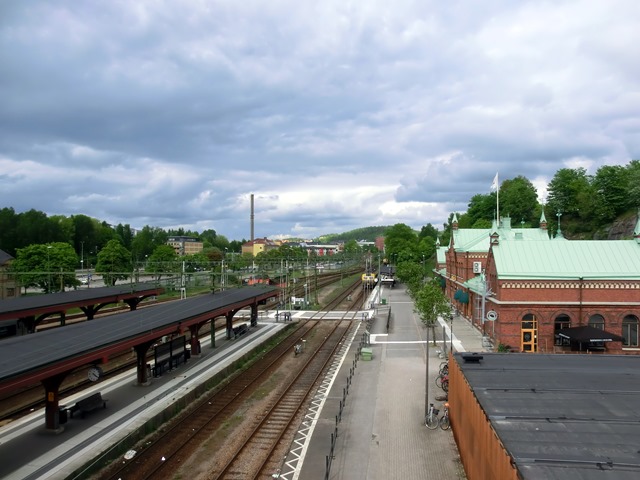
Having crossed the bridge and the railway station, if you turn left you will find your way to the city center. I, however, will be going in the opposite direction to get back home!
…
Sharing with:
Friday My Town (Meeting Spot) and Skywatch Friday