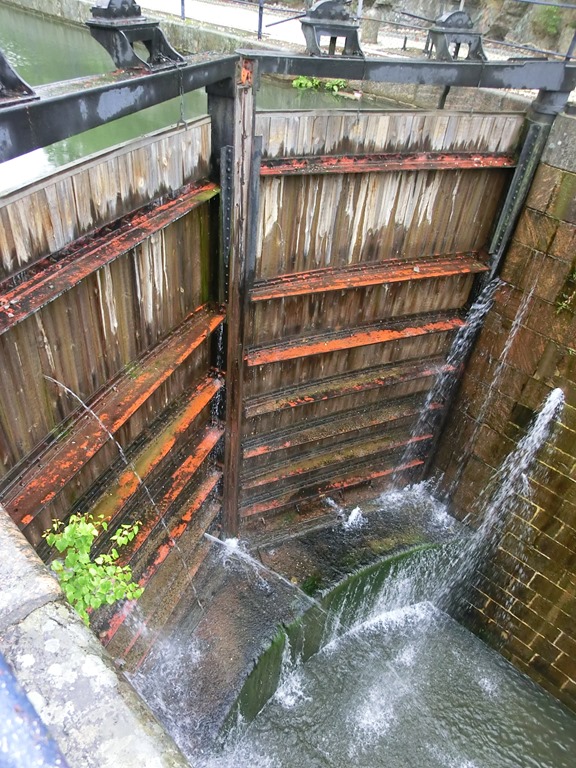
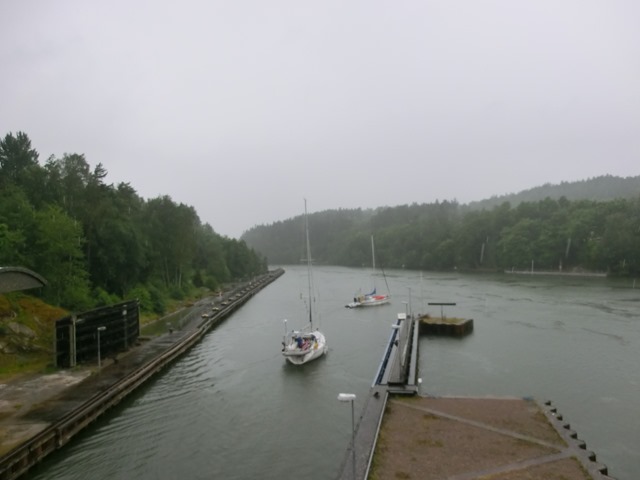
I have blogged about Göta Kanal and its locks before - for example two years ago, from Trollhättan.
“Göta Canal was constructed in the early 19th century to connect lakes and rivers from Göteborg (Gothenburg) on the west coast all the way to Söderköping on the east coast. The construction of the Göta Canal, finished in 1832, was by far the greatest civil engineering project ever undertaken in Sweden up to that time; requiring 22 years of effort by more than 58,000 workers.”

East of Motala, at Borenshult, Lake Vättern is connected to Lake Boren, with a steep “staircase” of five interconnected locks with a total height difference of more than 15 meters; built between 1823 to 1825.
We went to see these locks in the morning of the third day of our trip (29 July; after having stayed the night at a hotel in Motala).

Motala seemed a little reluctant to let us go…
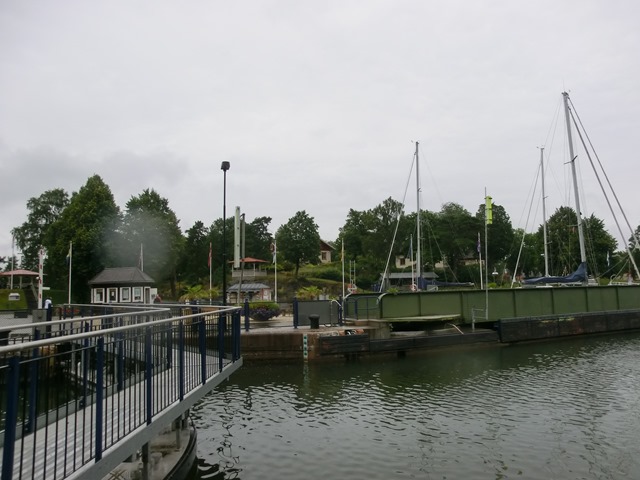
Drawbridge over the canal opening up for boats to pass.


This bridge still manually manouvered from a cabin by the bridge.

On our way to the locks, we also made a quick stop at Charlottenborg, a manor house from the mid 17th century situated by Motala River; now housing Motala Museum. We were there too early in the morning for the museum to be open yet, so just went for a whort walk around the house and looked at the views.


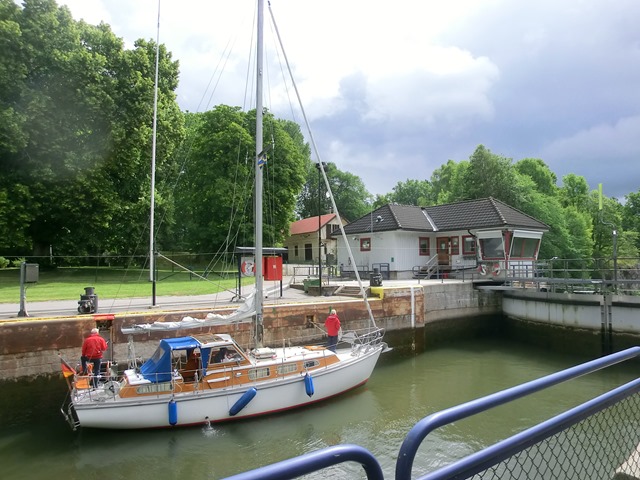
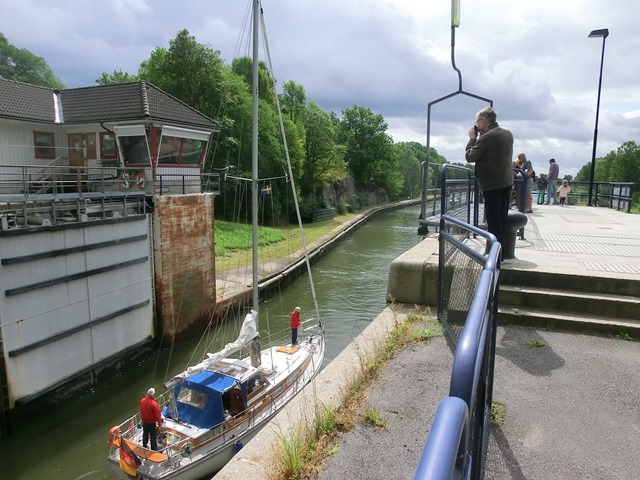
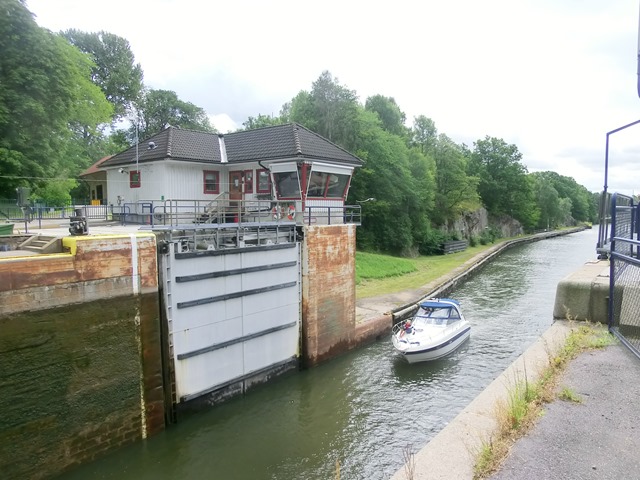
By the time we arrived at the locks, it had stopped raining. And as there were boats on their way up the locks, we stayed around a while to follow the process.

Lock filled with water. You can see the masts of boats waiting in the one below to go up.
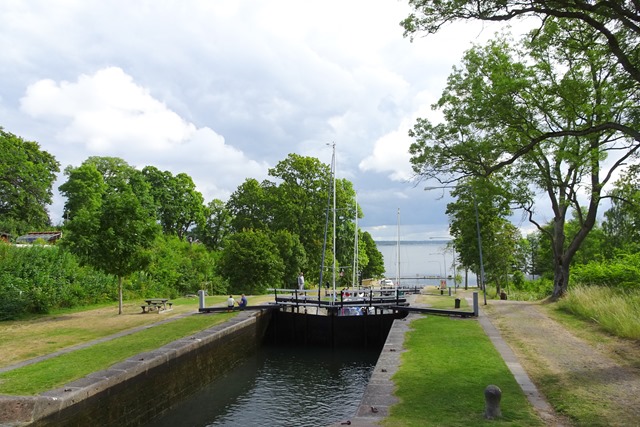
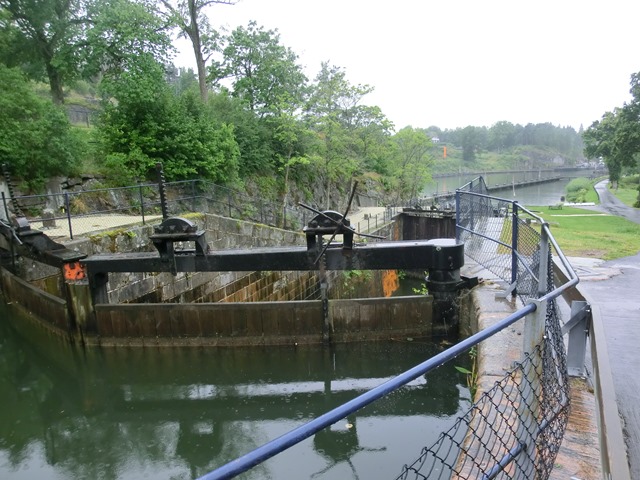
Water level being lowered in the upper lock.

Looking in the direction the boats will be going.

Water level now even with the next lock, gates opening.
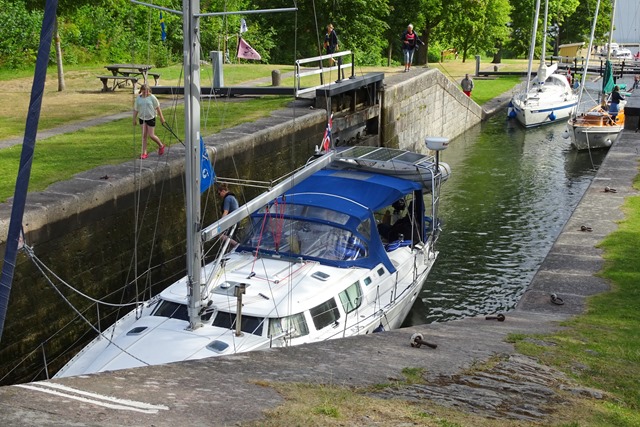
A lot of manouvering required to get the boats in place.

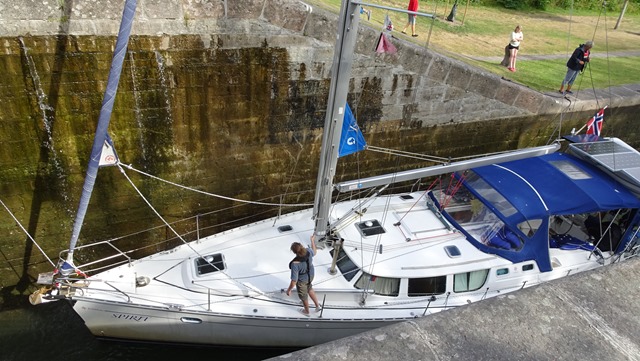

Then the water level can be raised again, to lift the boats to the next level.
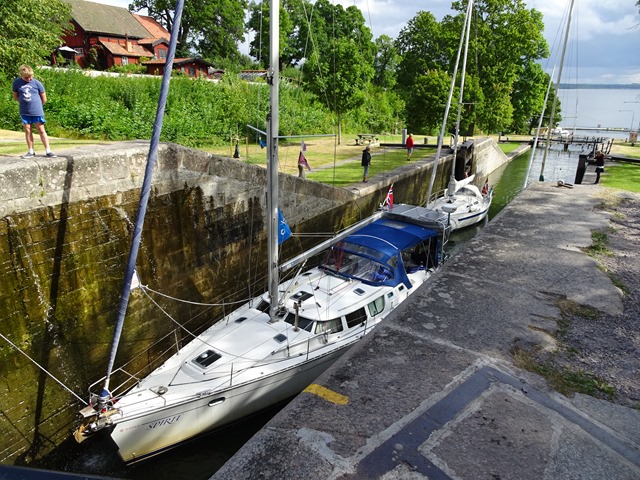
I crossed over to the other side of the canal for a look while the bridge was still in place.


There is a type of drawbridge here that we had never seen before. It neither goes up, nor swings sideways, but just slides back on top of the road.
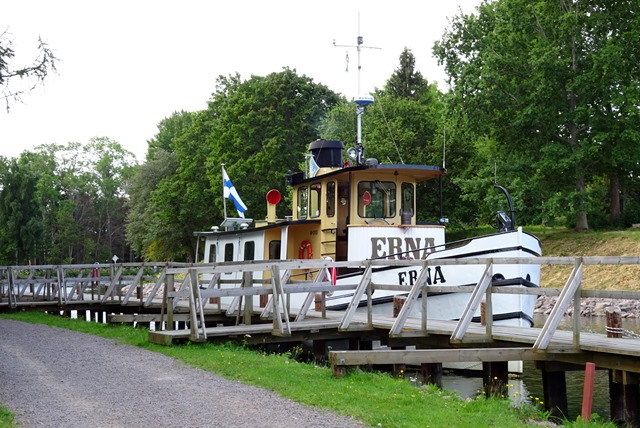
Waiting on the other side of the bridge, for their turn to go down the locks.


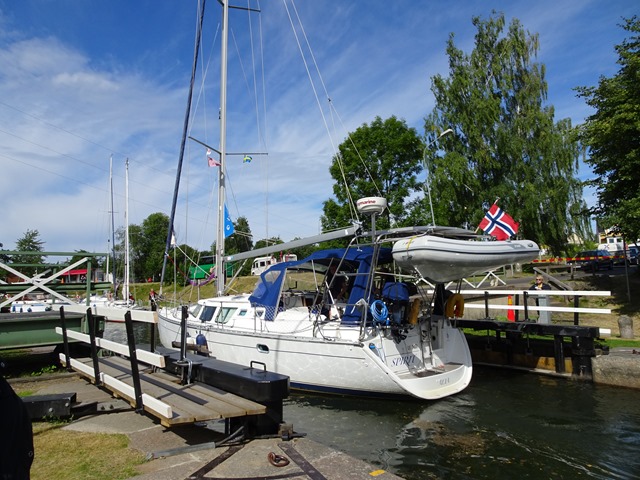
Here we go – the bridge has magically opened.
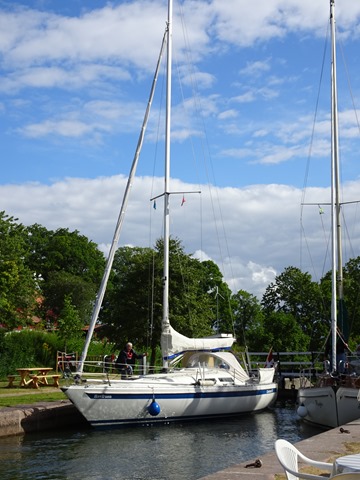

And when the boats going up have passed through,
then come those who have been waiting to go down.


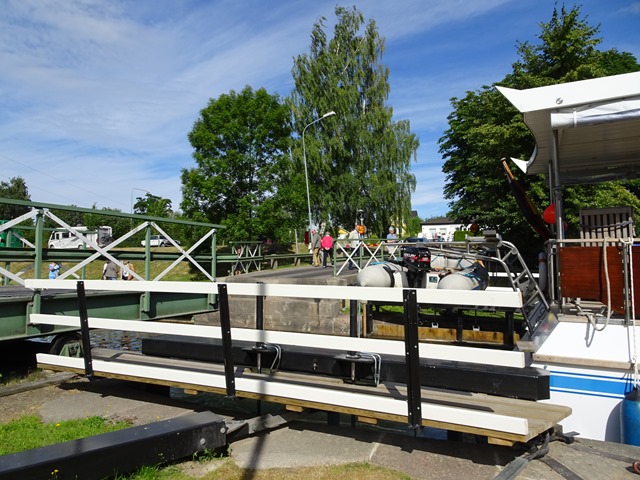
Bridge closing again, after the last boat going through.
(Meanwhile, cars queueing on both sides of the canal.)
I tried to film the sliding bridge as well – but had trouble getting the video to show on the computer. Now I have found it, and will try to put it into a separate blog post. Hope you’ll be able to see it as well.