Showing posts with label Spanish. Show all posts

Thursday, 20 May 2021

Celebrating 5 Years with Duolingo


I'm celebrating 5 years of daily Spanish lessons at Duolingo.com

(Spanish)

You who have followed me through these five years know that along the way, I have also dipped into several other languages - some for repetition (German, French), some because they were already somewhat familiar (Norwegian, Danish, Dutch); and some just as a challenge to see how the brain would cope with something totally different (Welsh, Turkish, Russian). My latest addition to the last group is Finnish, which was introduced on Duolingo last summer. (Although Finland is a neighbouring country, Finnish is of totally different structure/origin than Swedish.) While I'm unlikely to ever learn enough of any of those last four languages to be of much use in direct communication, I still feel it's taught me a fair bit about languages in general. And I do feel rather proud of myself for having kept up my "streak" of daily Spanish lessons (+ more) through five whole years now . I would not have dared guess that when I started!

Friday, 17 March 2017

Postcards for the Weekend: Spain

This weekend at PFTW, Maria asks us to share postcards “from a country you wish to visit”. 

To be honest, I’m not really longing to go anywhere at all these days, unless I can learn to apparate and be allowed to borrow Hermione’s beaded bag. (If you don’t know what I’m referring to, you need to read Harry Potter! Instant magical transportation, and a tiny little handbag which still magically has room for absolutely everything one might possibly need…)

But if I pretend for a moment that I could do that, and was to go now, I think I might choose Spain. I have been there once, but that was 50 (!) years ago. It was in May 1967, it was our very first family trip abroad, and I was eleven going on twelve. We stayed in the small town of Sitges near Barcelona, and also went on a couple of tourist day trips by bus out of there – one to some small village up in the mountains, and one into the city of Barcelona.

In January (2017) I received this card from Ginny in the US, which brought up memories of the unique Barcelona architecture:

161231-170116_2 from Ginny 1702
Barcelona – Pavelló a l’entrada principal del Park Güell
(Pavillion near the main gate to Park Güell)
Postcard sent from the US, 2017

This park was built between 1900 and 1914 and was officially opened as a public park in 1926. In 1984, UNESCO declared the park a World Heritage Site under “Works of Antoni Gaudí”.

I’m not sure if we visited that park, but I know we did see the famous cathedral*basilica La Sagrada Familia and some other buildings by Gaudi. The cathedral, started in 1882, is still being built… Checking up on it in Wikipedia now, it seems they estimate completion in 2026-28! (Maybe I’ll go in 2030 or so to check?)

My old postcards from 1967 are all glued into an album together with some very blurry black-and-white photos of my own. It’s a spiral-bound album so it can’t be put on the scanner… But I tried copying some with my camera (digitally cropped and edited after):

CIMG0585

▲La Sagrada Familia, postcard image from ~1967 (or earlier).

▼Below, for comparison, an image from Wikipedia 2009.
I do think the cathedral has kept growing…!▼

Sagrada Familia 01.jpg
From Wikipedia

CIMG0581 

▲ Another Gaudi building (postcard from ~1967).

CIMG0582

▲ Postcard images from Sitges ~1967 ▼

CIMG0583

To finish off: A postcrossing card from Madrid landed on my doormat this week, reminding me of Spain again. It shows signs with street names painted on tiles, from Madrid.

170313 ES-455912 Calles de Madrid
Calles de Madrid – Postcrossing card (ES-4559912), March 2017

Quite an interesting challenge for me to try and figure out what the names meant. The one that puzzled me the most was “Calle de la montera”. I couldn’t find montera in my dictionary, and didn’t understand what the picture was supposed to be. After a bit of internet research I learned that montera is a bullfighter’s hat:


Montera - Photo from Wikipedia

PS. I see now (Wikipedia) that I made a mistake in calling La Sagrada Familia a cathedral, as it is not the seat of a bishop. The proper name is "basilica".

Weekend Linky Party:
#29

Monday, 27 February 2017

Finished At Last

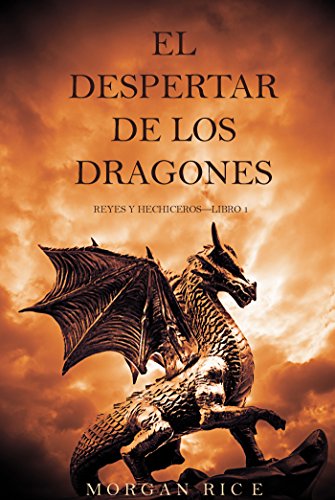
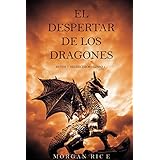
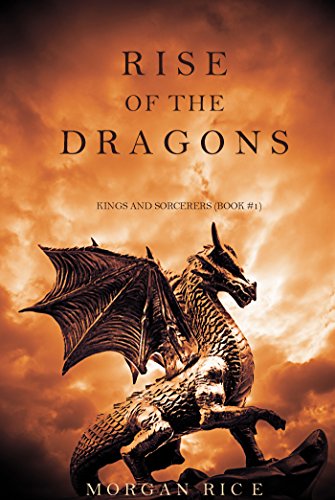
Rise of the Dragons (Kings and Sorcerers--Book 1) by [Rice, Morgan]El Despertar de los Dragones (Reyes y Hechiceros-Libro 1) (Spanish Edition) by [Rice, Morgan]

Rise of the Dragons by Morgan Rice*

At last I’ve reached the end of this book that’s taken me 8 months to read – on average, one chapter per week. But then I’ve read each chapter twice: first in Spanish (which I only started learning in May last year), and then the same chapter in English to pick up what I might have missed, before going on to the next chapter. As I’ve never read a book in that way before, I suppose one might call it a novel experience… (haha)

I did of course miss details here and there, and my poor knowledge of grammar also occasionally made me “reverse” meanings (like who hit whom with what). On the whole, I usually got the gist of the story from the Spanish (and feel rather proud of myself for that). But at the same time I doubt I’d have made it all the way without having the English version as well.

It probably wasn’t a bad book for the purpose. Even in Spanish I noticed a lot of repetition – like the exact same phrases often used over and over again. When learning a new language, that can be useful. From a strictly literary point of view, however, it tends to get a bit… well… repetitious!

I think I can imagine the book perhaps appealing more to younger readers. Not too young though, as some of the scenes involve a lot of violence.

The setting is kind of unspecified medieval fantasy (as in no modern transportation or technology; but with trolls and giants and dragons).

The main character is Kyra, a young girl on the verge of becoming a woman, but dreaming of becoming a warrior like her father. Her mother died when Kyra was young; and she grew up being the only girl in a fort full of boys and men.

When Kyra comes of age (15), her father wants to wed her off to the lord of the region (to save her from a fate possibly worse, as according to his own laws the lord has the “right” to take whoever he wants anyway). Kyra refuses, and in the midst of midwinter, she wanders off alone into the woods, where she encounters a wounded dragon — a meeting that turns out important, but also raises a lot of questions. Kyra also learns that there is some mystery connected to her own background and birth, that no one wants to tell her about.

There are a couple of more storylines involving other characters (and further threats to the kingdom) as well. All the storylines do not come together within the span of this book – but I was prepared for that, as I knew from start that it was the first in a series.

Alas (or perhaps somewhat to my relief!) I can’t say that I feel immediately tempted to jump straight on to the next book to find out what happens. On the other hand, I do suspect that “images” from this book may stay in my mind for a quite a while; and not all to do with the double language experience. Because if a book without illustrations, and read primarily in Spanish (a language I’d only just started learning when I began reading the book) can leave me with lingering visual impressions of scenery and events (rather as if I’d seen it on film) – then surely some of the credit for that must go to the author.

Trying to consider the story from a “young adult” reader’s perspective (easier said than done at my age), I think I would say that its main strength is probably a young female heroine fighting her own way in a world of men – and seeking/finding her inner strength along the way. Apart from that I find the characters rather  shallow and “either black or white” – and in my opinion (as already indicated above) too much focus on physical fighting and killing. (But to be fair, I suppose the same thing can too often be said about the real world as well!)

* PS. Morgan Rice, it seems, is a highly productive writer of  self-published fantasy novels.

Saturday, 27 August 2016

100 Days of Duolingo

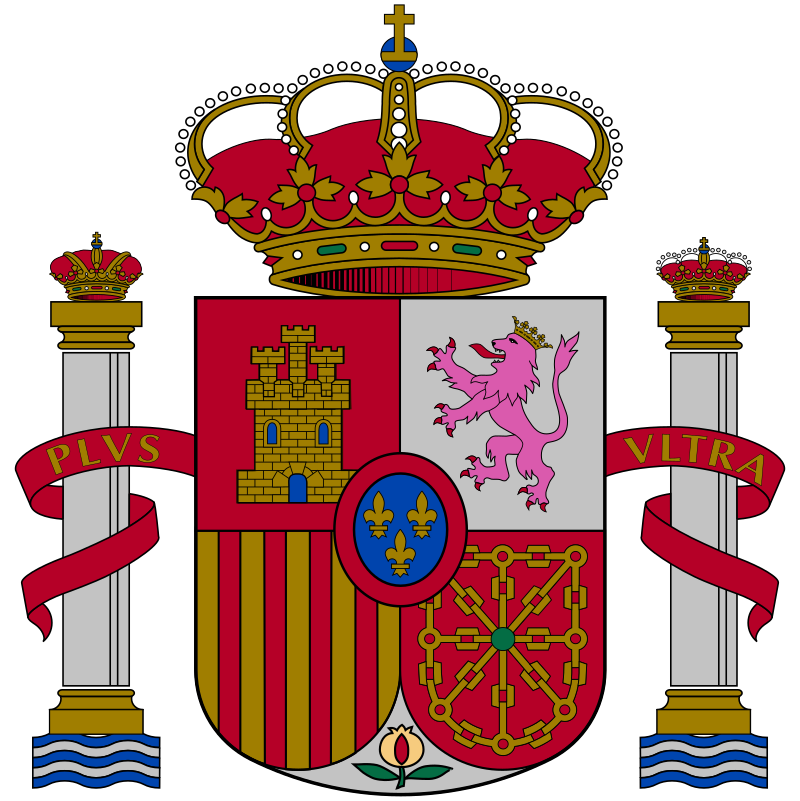
Spain’s Coat of Arms
Motto: "
Plus Ultra" (Latin)
"Further Beyond"

This week I celebrated my 100 Days of Spanish anniversary. Can you call it an anniversary when it’s less than a year? Anyway: 100+2 days have passed since I started learning Spanish, using the Duolingo app recommended by another blogger (Janet). My last report here on my blog was after 40 Days, when I had made my way through all the basic Spanish lessons in the phone app. Since then I have kept on doing daily “strengthening skills” exercises though, and on my 100th day was also rewarded with a timely upgrade to the neat figure of 40% fluency (and level 16).

Besides repetitions of Duolingo I have also continued with the fantasy book I found for free in both Spanish and English on Kindle (El Despertar de los Dragones / Rise of the Dragons by Morgan Rice, also mentioned in the 40 Days post). I’m still reading each chapter in Spanish first, and then again in English to check my understanding. I’ve not been reading that book every day, as it still requires some serious concentration… But I’ve got as far as into chapter 9 (nearly 40% of the book), and I’m still set on finishing it (without cheating and skipping ahead in English). Being a YA fantasy novel in a medieval sort of setting, I think it’s rather a good book for the kind of basic vocabulary I’ve picked up (+ I have added a Spanish-English dictionary to the Kindle, and just have to put my finger on a word to look it up).

I have also worked my way through the French Duolingo exercises. Basically repetition for me, but over 40 years have passed since I learned French in school, and I’ve never used it much since. I found some lessons easy, others trickier. My passive understanding not too bad, but active use a different matter… 
(Duolingo now rates me as 38% fluent at level 12.)

I also tried a little Welsh, and a little Turkish. But both these languages are new to me  and very different, both  from other languages I know and from each other. After having tested daily lessons in both simultaneously for a while (just curious about my own brain’s capacity of coping with it!)… I think I have come to the conclusion to drop Welsh for now, but continue with Turkish. A Swedish Television channel just started running a Turkish drama series of 100 episodes… I watched the first five half-hour episodes this week (with Swedish subtexts) and noted that I did recognize a few phrases or words from Duolingo – just very simple things like “yes” and “thank you”, but still. Might be interesting to see what happens if I give that 100 days as well!

Sunday, 26 June 2016

¡Buenos días!

spanish 37% Duolingo 160626

Maybe some of you will remember (at least if I remind you!) that around six weeks ago, I happened to hear about the language app Duolingo, got curious about it, and decided (quite on a whim) “to try a bit of Spanish”, to see how far that method of learning would take me, in, for example, a month or two. I did not set my goal very high – I actually only expected to play with the app for perhaps 30 minutes a day. But in reality, most days during these six weeks I probably ended up spending at least 1-2 hours with it (not all in one go, but for a little while now and then, several times a day).

I also found an old Spanish primer and grammar in my bookcase. My memory has been deceiving me for years to believe that those must have belonged to my mum, who (I thought) might have wanted to learn a few phrases before we went to Spain on a family holiday back in 1967. (I was eleven going on twelve at the time, and all I recall learning back then was to count to ten or twenty - so that I could buy paper dolls in the little shop in the street where we were staying.)

However, when taking a closer look at these books, I found that they were from 1974, so not connected to that holiday. Moreover, it’s definitely my handwriting (and not mum’s) in the ejercisios in the first three chapters of the primer, belonging to a TV/radio distance course. So even though I remember nothing at all about it, I must conclude that I started out with good intentions, but soon gave it up! (1974 was the year when I graduated from senior high and then took a “gap year” working in an office, while still living at home. It was also the year when I got my driving license, and I suspect I found other ways of spending my evenings…)

Now, 40+ years later, I’m happy to report that this time I stuck at it a little bit longer. Still remains to be seen how much further, of course! But in these six weeks, I managed to work my way through all the 14 levels of the Duolingo app (+ quite a lot of repetition in between), and reached “37% fluency”. Have to admit I’m feeling quite proud of myself - even if I do realize that most of my progress has been in passive understanding rather than in active use of the language. (And as for grammar… I think one probably does need some extra time with a grammar book besides Duolingo, to grasp some things properly…)

To celebrate my 40 days introduction, I am now giving myself a serious test of the “understanding” part, though. Yesterday and today I have read the first two chapters of a book which I found free for Kindle in both Spanish and English: Rise of the Dragons / El Despertar de los Dragones by Morgan Rice.
Product DetailsProduct Details

Rice is an American author of fantasy novels, not Spanish - but never mind! The main idea was to find a book (preferably for free) that I could read in both languages, so that  1/ I can compare, and 2/ if I feel I get stuck, I can still finish the book... I also invested a few dollars in a proper Spanish-English dictionary for Kindle (only need to point at a word on the screen and the English translation / explanation comes up).

So far I’m actually getting along rather well, even if  at a very slow pace … What I did was to read the whole first chapter in Spanish (and really making efforts to understand); and then the same chapter in English. Same procedure with the second chapter today. Of course there were details I missed or got a little bit wrong. But on the whole, I am surprised (and encouraged!) at how much I actually do manage to understand – and also at how much of the vocabulary learned from Duolingo came in useful.

After having gone through all the levels of Spanish, I have also (the last few days) tried a bit of French (which I did learn for five years at school back in my teens but have hardly used since). I’m not sure whether it’s me or the app, but so far I’m finding the French version more boring than the Spanish one. Not because I’m sailing through it (rather the opposite – I’m a bit shocked at how much I’ve forgotten) but because of the content. Seriously: I’ve never been to France. But if anyone reading this has more intimate knowledge of that country, can you please tell me: How many Frenchmen nowadays have a pig? And how many of those who do happen to have one, carries it around with them? And if so – why? Because they only seem to lose it, and then have to go looking for it, and… (…)

So, getting a bit bored with French pigs, I switched to Welsh, just out of curiosity, because I’ve always been fascinated with it (ever since family holidays in Britain in the 1970s) and thinking that it must be such a hard language to learn. I still suspect that it is. But I do quite like the introductory approach Duolingo is taking to it. If ever I go to Wales again I’ll be able to say: Draig dw i (I am a dragon)! 

Flag of Wales 2.svg
(National flag of Wales)
Related Posts Plugin for WordPress, Blogger...