Showing posts with label fiction. Show all posts

Sunday, 29 December 2019

Read in Nov/Dec - Book Reviews

Trying to "catch up" with a number short reviews of what I've been reading and listening to in November and December...


The Murder at Redmire Hall by J.R. Ellis
(Kindle + Audible)
No 3 in the Yorkshire Murder Mysteries series


Lord Redmire intends to perform an impossible locked-door illusion on live TV. But the trick goes fatally wrong - and right in front of special guest DCI Jim Oldroyd... As Oldroyd and his DS Stephanie Johnson soon discover, nearly everyone at the event had a reason to resent the eccentric lord. But in this case, it’s not just a question of who did it and why - but how?

It may have been this locked-door mystery that made me look up and re-read another classic in that genre. (Which I've read before, in Swedish, but I always seem to forget the details of mysteries after a while, so usually fall for the same traps when I reread ...) 


The Red House Mystery by A.A. Milne (1922)
(Kindle)
 
Yes - by the author of Winnie the Pooh! Milne wrote other things as well, but I think this was his only mystery novel. The book was an immediate success when it was first published, frequently reprinted, and is still regarded as a classic in its genre. The setting is an English country house, where the owner has been entertaining a small house party, when a long-lost brother, the black sheep of the family, arrives - and is shortly afterwards found shot under mysterious circumstances. A friend of one of the guests turns up, and together the two friends take on trying to solve the mysteries in a Sherlock & Watson fashion.


Miss Hargreaves by Frank Baker (1940)
(Kindle + Audible) 

This is a book I got curious about after reading a review by Terra at the blog *Terra Garden*. I first read it on Kindle, but then decided this was one I'd also probably enjoy listenting to (and perhaps more than once) - so bought the audio as well. (I don't regret that. The audio narration is very good too.) 

The narration style reminded me a bit of one of my favourite classics, Three Men in a Boat by Jerome K. Jerome. However, Miss Hargreaves also has a touch of magic to it - although I don't think the word magic is ever used in the story. (Mary Poppins also came to mind for me - even if I suspect that both Mary and Miss Hargreaves might resent the comparison...)

It is not a children's story, but it involves a great deal of whimsicality or "spur of the moment" ideas - and afterthought. It all starts when the narrator, a young man by name of Norman, and his friend Henry, are away on a holiday and visit a church as tourists. In conversation with the man showing them around in that church, they "happen" to invent a fictive acquaintance - Miss Hargreaves. This spur of the moment impulse comes to cause them a lot more trouble than they could ever have imagined...


The Starless Sea by Erin Morgenstern
 (Audio, 18:37, multiple narrators)

Quick summary: Not worth the time!!

I kept hoping that at some point I'd reach an 'aha' moment in this book... But it never came! It's a fantasy story, and like many great stories it starts with a door to a different world. However, to me this book read like a tedious computer game of the kind where ever so often you just come to a dead end, and have to start over; and then it's the same story all over again with very little change; until another dead end, and so on and so on. For a while I thought that perhaps to realize this was meant to be "the point" - but having reached the last page, I still couldn't really see it leading anywhere. So either I missed the point, or else there wasn't one. Only one thing seemed certain, and that was that I wasn't going to try and listen to it again to find out.  So for once, I actually made use of my Audible membership benefit to send back a book one didn't like (and get a credit to use for another instead).

Decided to "play it safe" with the next listen, and catch up with the latest Botswana No 1 Ladies' Detective Agency adventures... Oops, I found there were two I had missed...


The Colours of All the Cattle by A McCall Smith
(Audio, 8 h, narrated by Adjoa Andoh) (2018)
No 19 in the No 1 Ladies' Detective Agency series 

Mma Potokwane suggests to Mma Ramotswe that she run for a seat on the city council - against Mma Makutsi’s old enemy Violet Sephotho...


To the Land of Long Lost Friends by A McCall Smith
(Audio, 7:35 h, narrated by Adjoa Andoh) (2019)
No 20 in the No 1 Ladies' Detective Agency series 

Mma Ramotswe takes on a case for a childhood acquaintance; and Charlie is dreaming of getting married, but wondering how to be able to afford it.

McCall Smith is one productive writer...!
I actually found both these quite enjoyable, though.
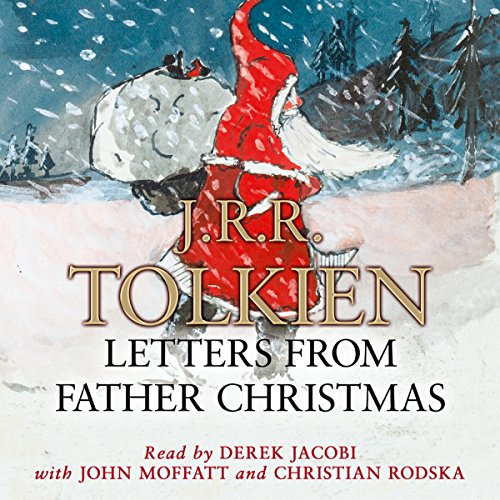


Letters from Father Christmas by J.R.R. Tolkien
(Audio, 2:07 h) 

Letters written by J. R. R. Tolkien (alias Father Christmas) for his children, between 1920 and 1943. The book was released after his death. I'm guessing it's best read in print with the original illustrations - but the audio presentation was quite nice to listen to as well (with Christmassy music interposed between the letters).


The Sugar Queen by Sarah Addison Allen
(Kindle) (2008)

I haven't quite finished this book yet, but hope to do so before the end of the year (or else, at the very beginning of the next one). Sarah Addison Allen writes novels classified as "magical realism" and "chic lit". I think I've read them all now; this was her second out of six. (They're stand-alones so the order doesn't really matter.)  
Typically the magic in her books has to do with food (especially sweets) - like women having inherited a special witchcraft kind of knowledge how to use secret ingredients to create certain effects. In this book, she also sort of gives new dimensions both to hiding things (or people!) "in the closet", and of books turning up just when you need them (even if you're not looking for them), giving you hints to what you ought to do...

Thursday, 27 March 2014

BTT: Why Read Fiction?

Deb at Booking Through Thursday wants to know:
”Why do YOU read fiction?

The Browning Readers

The Browning Readers (1900) by Sir William Rothenstein (1872-1945)
Oil on canvas, Bradford Art Galleries and Museums.
(Postcrossing postcard recently received from the US.)

I suppose one answer to why I read fiction would be simply that I always did. It’s been part of my life since the Beginning. Before I could read myself, my mother read to me. There was no television in my first years of life, back in the 1950s. There were books, and there was the radio (two channels), and that was that.

When I learned to read, I continued to read books on my own; and besides school books, it was mostly fiction (mum and I frequently visited the library). I never questioned the “point” of reading fiction. But looking back, I think I’d say that fiction serves a double purpose: You can “escape” from your physical surroundings into a novel, but still keep learning things that apply to real life at the same time.

Kolobok

Today I received this postcard from Russia. The illustration belongs to a Russian folk tale, “Kolobok”. This did not mean anything to me until I looked it up in Wikipedia:

The Kolobok, (traditional Russian and Ukrainian pie/ small bread), suddenly becomes animated and escapes from "babushka" and "dedushka"s (old wife and man) home. The fairy tale's plot describes Kolobok's repetitive meetings with various animals (rabbit, wolf, and bear) who intend to eat it, but Kolobok cunningly escapes. With each animal Kolobok sings a song in which he explains his escape deductively: "I got away from Grandmother, I got away from Grandfather, and I will certainly get away from you". The fox manages to catch and eat Kolobok through distracting him by praising his singing.

This struck me as slightly familiar – and yet not quite… I read on, and realised why. In Scandinavian tradition there is a very similar story about a Pancake – but it’s a pig that finally eats it. And in other European countries there are other varieties still of the same tale.

Fascinating, isn’t it, how folk tales were memorised and kept alive even before they were written down.

Incidentally, from Wikipedia I also learn that nowadays the word kolobok is also used for the yellow smiley emoticons frequently used in internet communication:

Thursday, 23 May 2013

BTT: Childhood vs. Adult

btt buttonfrom Deb at http://btt2.wordpress.com/

Have your reading habits changed since you were a child? (I mean, I’m assuming you have less time to read now, but …) Did you devour and absorb books when you were 10 and only just lightly read them now? Did you re-read frequently as a child but now only read new books? How about types of books? Do you find yourself still attracted to the kinds of books you read when you were a kid?

It’s a long time since I was a child… :)

I’d say my reading habits have gone through changes both back and forth and across since I first learned to read (over 50 years ago). I did devour books when I was about 10, I think I borrowed piles from the library almost every week back then – like The Famous Five and Nancy Drew and Anne of Green Gables and Cherry Ames (and similar kinds of books by Swedish authors). I’m sure I read many of those more than once – especially the few I owned myself, but also some borrowed repeatedly from the library.

It still happens that I return to classics like Anne of Green Gables, while other childhood favourites were gradually replaced from my teens onwards by more grown-up mysteries and detective stories and romance novels and whatever.

I still like to go back and reread certain favourites from time to time – and that includes all genres I think (and also to watch favourite TV-series over again on DVD). Stories are much like friends in that way… Spending time with old friends is comfortable, but it’s also stimulating and challenging to meet new ones. (And sometimes you discover new things about old friends, too!)

Thinking back, one thing that strikes me is that there were certain children’s books that I did not read in childhood but which I came to love later on – like the Narnia books by C.S. Lewis. (First published 1950-1956 but I did not come across them until in the late 1970’s when I was in my 20’s.) I don’t recall reading a lot of fantasy and fairy tale kind of books back in my childhood. One reason may be that my mum (who no doubt influenced much of my early reading) was never much into that kind of stories. She preferred books closer to reality. Another reason may be “the spirit of the era”… Correct me if I’m wrong, but my impression is that the fantasy genre was not very big in the 1960s. Especially not the witches and wizards kind. I think there was a bit of a revival for authors like Jules Verne and H.G. Wells though. (After all, the 1960’s was – among other things - the decade of moon landings… More science fiction, and turning towards the future rather than seeking roots in old legend.)

There were some children’s books that stretched imagination without being neither magical nor scientific though, like The Borrowers by Mary Norton (the first four written between 1952-1961), which are among my favourites that I’ve kept returning to. A couple of years ago I read them for the first time in English (in my childhood it was of course the Swedish translations that I had), all in one volume together with the fifth book written much later (1982).

Out of curiosity I just checked the bibliography of Astrid Lindgren, probably the internationally best know Swedish author of children’s books, some fantasy and some not. In the 1960’s she too kept to down-to-earth kind of stories, with the border-line exception of two sequels to Karlsson-on-the-Roof (1st book 1955, the sequels 1962 and 1968).

I guess I made up for a certain lack of magic in my 1960’s childhood by becoming a Harry Potter fan in my late 40’s (onwards)… :D

I still like to read a mix of genres, and a mix of old and new. Since I bought my Kindle last autumn I’ve been exploring both some classic children’s books (for example some by Edith Nesbit) and various authors of contemporary fiction for adults that I’d never heard of before.

Thursday, 8 March 2012

BTT: Sequel

Booking Through Thursday question from Ted  (via Deb):

Which non-series book would you most like to read the sequel to?
Do you have any wishes for what might happen in it?

This is one of those questions that I think maybe I found it easier to answer when I was young. I was probably more prone back then to rewrite endings in my head if I did not like the one given. Now I usually don’t speculate that much unless perhaps when I know there is to be a sequel. But the only ‘serious’ (not all that serious) speculations of that kind that I’ve been involved in was probably while waiting for the end to the Harry Potter story.

Back in my early teens I know I wished for a  sequel/ different ending to the Diary of Anne Frank, but at the same time well aware that since Anne really died in concentration camp, this was not going to happen.

That’s probably also the kind of story that may still make me wish for different endings or impossible sequels. Come to think of it, that’s what I did between the last Harry Potter books as well: Trying to find ways to bring back characters who had been killed! (A wish, by the way, that the author also dealt with in those books, but in a different way.)

As far as I can recall, I don’t think I ever yet tried to read any of those fake sequels that sometimes pop up, like one author writing a sequel to someone else’s original story.

Thursday, 17 March 2011

Booking Through Thursday – Headlines

image

btt buttonDeb @ 1:13 am

http://btt2.wordpress.com/2011/03/17/headlines/

The news has been horrifying and addictive this week, with catastrophe piled on catastrophe, to a degree that–if I had read this in a book or seen it in a movie–I’d be protesting that it was just too unlikely, too farfetched.

But, topics for novels get ripped from the headlines all the time. Or real-life events remind you of fiction (whether “believable” or not) that you’ve read but never expected to see. Or real life comes up with an event so unbelievable that it stretches you sense of reality.

Hmm … I can’t quite come up with an outright question to ask, but thinking about the theory of fiction and how it can affect and be affected by real world events can act as a buffer between the horrific events on the news and having to actually face that horror. So … what happens when the line between fiction and reality becomes all-too slim? Discuss!

… … …

That has got to be the hardest question yet from the weekly Booking Through Thursday meme!

I know I commented to someone yesterday – right now I can’t recall to whom – that one thing that perhaps makes a catastrophe like that in Japan – or, just weeks before, also the earthquake in Christchurch, NZ – come “closer” to us who live on the other side of the world, than some other world events do, is that it was brought about by Nature. We can sympathize without mixing it up (immediately, anyway) with the question of Who To Blame, which is there whenever war or terrorism is involved.

At the same time, having no one to blame often makes us feel helpless and confused. So with any kind of accident we still tend to get hung up on questions like: Could this not have been foreseen and prevented? And to follow: Did we react quickly enough? Were the right decisions made within the first five minutes/first day/whatever? Isn’t there someone whose head should be cut off (at least figuratively) for not doing a better job…?

I suppose that’s one area where fiction steps in as a buffer. In crime fiction for example, things get sorted out in the end. All damage cannot be healed; and people are rarely raised from the dead; but the reader is not left in the darkness of mystery. Someone was to blame and they usually do not go unpunished.

With fantasy literature – at least most that I read - I’d say these kinds of books usually also have a mythological foundation in that there is a battle between good and evil, which often involves also other beings than just humans and animals. (Elves, trolls etc.) Sometimes nature itself gets involved and take sides – like when the trees/ ents march to Isengard in Tolkien’s Lord of the Rings. Landscapes and climate are used to illustrate moods and spiritual status – like mountains and valleys, ice and water, woods and deserts, or flying vs going down deep under the surface. Like the mines of Moria (Tolkien) or the Underland (CS Lewis: The Silver Chair).  Very little is left to pure chance. Somewhere in the background there is spiritual warfare; powers are at work that go far beyond what can be seen.

The relief that fictional stories of this kind brings us (as does religion) is that there is an end to it. There comes a day when we’ll be able to put the book down and say “phew”.

With authors like JRR Tolkien and CS Lewis, their fiction reflects their personal Christian faith, with a deep interest in theology as well as classical mythology (especially Greek, Roman, Celtic and Old Norse, which are all also embedded in our Western culture).

I see the same pattern in JK Rowling’s Harry Potter series. She may be simplifying things in some ways, and complicating them in others. But whether one sees her attempts as wholly successful or not: By letting the Wizarding world and the Muggle world (our modern world at the end of the last century) interact, with only a limited number of characters able to move between both, she does bring in the perspective of “unseen powers” at work.

The sixth book in the Harry Potter series (The Half-Blood Prince) opens with a chapter called “The Other Minister” which describes a meeting between the Prime Minister of England and the Minister for Magic in the Wizarding World (Fudge). The latter has a very different explanation of some recent events that have also mysteriously affected the Muggle world. (Muggles = non-wizards.) Like a collapsed bridge in central London, and a hurricane in the West Country.

The Half Blood Prince was released on 16 July, 2005. Rowling had intended to read from the first chapter of the book at her official presentation. The choice of text for the public reading was changed, because only a week earlier, on 7 July 2005, there had been a series of coordinated suicide attacks upon Londoners using the public transport system during the morning "rush hour". Fifty-six people, including four bombers, were killed by the attacks, and about 700 were injured.

Attacks that came just a little too close to the fictive disasters that open The Half-Blood Prince:

The Prime Minister’s pulse quickened at the very thought of these accusations, for they were neither fair nor true. How on earth was his government supposed to  have stopped that bridge collapsing? It was outrageous for anybody to suggest that they were not spending enough on bridges. The bridge was less than ten years old, and the best experts were at a loss to explain why it had snapped cleanly in two, sending a dozen cars into the watery depths of the river below. And how dared anyone suggest that it was lack of policemen that had resulted in those two very nasty and well-published murders? Or that the government should have somehow foreseen the freak hurricane in the West Country that had caused so much damage to both people and property?

And indeed, the explanation that the Minister for Magic gives turns out to be a little different: Voldemort and his Death Eaters were behind the bridge accident, and as for the hurricane:

‘… and we suspect giant involvement.’
The Prime Minister stopped in his tracks as though he had hit an invisible wall.
’What involvement?’
Fudge grimaced. ‘He used giants last time, when he wanted to go for the grand effect. The Office of Misinformation has been working around the clock, we’ve had teams of Obliviators out trying to modivy the memories of all the Muggles who saw what really happened, we’ve got most of the Department for the Regulation and Control of  Magical Creatures running around Somerset, but we can’t find the giant – it’s been a disaster.’
’You don’t say!’ said the Prime Minister furiously.

So with the tragic London events on everyone’s mind, the text for the public reading on the night of the book release was chosen from another chapter. Just one of those times “when the line between fiction and reality becomes all-too slim”, as Deb puts it in her BTT-question…

---

Headlines and distorted news actually play a very important role within the Harry Potter series. It is a recurrent theme through all seven books. Read more about that in an extended version of this post in my Harry Potter blog Through My Spectrespecs.

Related Posts Plugin for WordPress, Blogger...