Showing posts with label folklore. Show all posts

Friday, 4 August 2017

The Giant

According to an old legend, the island Visingsö in Läke Vättern was created by a giant named Vist. He and his wife had been to a party in the province of Västergötland, on the western side of the lake. When they were going back home to Småland, on the south-east side of the lake, his wife had problems getting over the lake in just one step. Then Vist picked up a turf of grass, and threw it into the lake, so that his wife could use that as a stepping stone.

The wooden sculpture of the giant (turf in hand) was made in 1969 by the sculptor/painter Calle Örnemark (from Jönköping). The sculpture was restored in 2015, shortly before the artist’s death. He made his sculptures from demolition timber.


DSC01041


170727-04 Jkp Jätten Vist1

Per doing his job again (showing you the size of the giant).


Karta Jätten Vist

The giant stands in Huskvarna (east of Jönköping) on the south-east shore of Lake Vättern, visible from the motorway. As we knew we wanted to stop and visit him properly, we took a detour on a smaller road to get closer.

Friday, 27 January 2017

Anything, or Wolpertinger (Postcards)

The Postcard for the Weekend theme this week is “Anything you wish”. And once again, a couple of cards happened to drop in during the week that fit the theme perfectly…

Of course you might argue that anything would fit the theme Anything. But having taken a look below, I think you will have to agree that it hardly gets more “Anything” than this!

170125 TW-2153439; by Jimmy Liao

From Taiwan (arrived 25 January 2017)
The artist is a popular Taiwanese illustrator, Jimmy Liao.
No explanation of the image is given – so I don’t know the creature’s name, or if it belongs in a special a story.
Two days later, however, I got a clue from a different source: Obviously it must be a Taiwanese cousin of the Bavarian Wolpertinger…

170127 DE-5918745 Wolpertinger

From Germany (arrived 27 January 2017)
Wolpertinger: A very shy creature from the alpine forests of Bavaria, which can only be found (if you’re lucky) at night, in favourable weather and moonlight. Take care – it may bite!

Gefangen und gezähmt im südöstlichen Heimatland am 29. Februar des Jahres. Diese Tiere sind äusserst scheu und bei günstiger Witterung und Mondschein nur Nachts anzutriffen. Vorsicht – können bissig sein!

Do I hear anyone saying “Bah! Humbug!”, and claiming that such creatures do not exist??

Actually the Wolpertinger has a cousin in Sweden as well. Ours hasn’t got the horns, but it does have the wings... It’s called a Skvader, and although it may be rare, there is a famous stuffed specimen on display at a museum in Sundsvall. I’ve seen it myself. There is proof in my old photo album from 1968…

CIMG0402

Weekend Linky Party:

Saturday, 19 December 2015

December 19 - The Christmas Gnomes

Last weekend, Frances Garrood posted a photo of a knitted crib. In a comment to her post I mentioned that my mum used to knit little dolls for Christmas fairs in the village where my parents lived in their retirement years. But mum's were not crib figures, but little (Christmas) gnomes (Swedish: sing. tomte/pl. tomtar). 

The 'tomte' of Scandinavian folklore is a small creature reminding of British brownies or hobs. Later on (late 1800s/early 1900s), the old stories about 'tomtar' got blended with St Nicholaous and Father Christmas traditions from Europe, England and America, to become Jultomten. We still sort of live with both kinds, though - both in Christmas decorations and songs and stories. Hard to tell these days really, whether there is just one tomte (with helpers) or many of the same kind; whether they live under the floor, or in cabins deep in the woods, or at the North Pole; and whether they prefer horses or flying reindeer. (I suppose that's part of their magic - to keep us guessing...)

All I know for sure is that this particular little family used to live in a wardrobe in my parents' house (most of the year), and spent their Christmas vacations on my mum's bedside table. Nowadays they live in my storage room in the basement; and spend Christmas on a shelf in my living room. (They're about the size of my hand.)


Saturday, 1 August 2015

Castle Ruins – Gräfsnäs (3)

CIMG5225-001

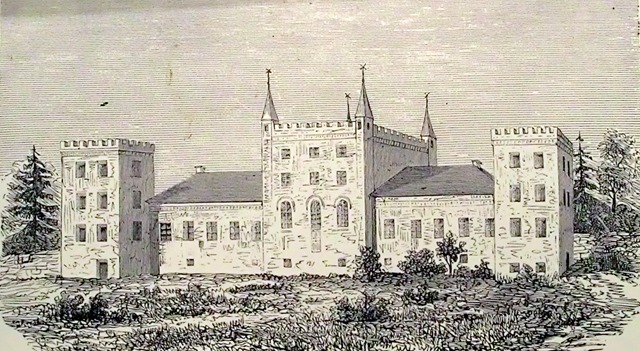
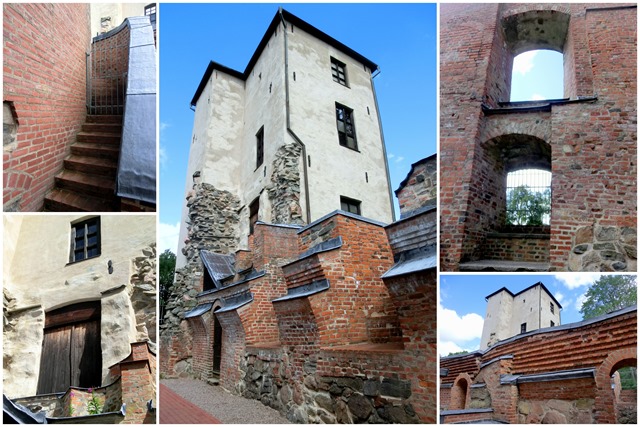
Gräfsnäs Castle (or Castle Ruin) today consists of an only partially restored ruin surrounded by a dry moat. Once upon a time though, this was a palatial fortress in Swedish-French Renaissance style, oringinally built in the mid 1550s.

The castle was burnt to the ground three times: 1634, 1734 and 1834; and after the last fire it was never fully restored again.

CIMG5227-001

One old tale says that the fires were predicted already in the 1500s by a woman with reason to hate the family who owned the estate back then. She cast a curse on the place and said that it would burn three times, and after that remain derelict – which all came true…

File:Suecia 3-052 ; Gräfsnäs.jpg
Image of the castle drawn by Erik Dalbergh in the late 1600s.
(from
Wikimedia)

CIMG5234-001
The castle before the last fire in 1834.

CIMG5243-001

CIMG5250-001

CIMG5231-001

2015-07-20 Gräfsnäs

CIMG5232-002

2015-07-20 Gräfsnäs1

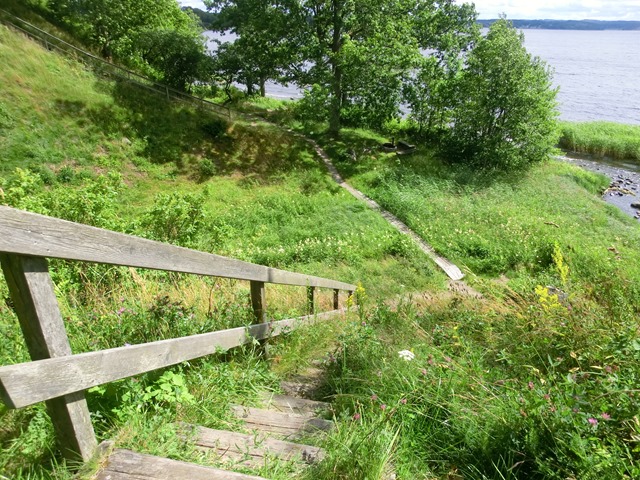
The castle ruins are beautifully situated on a hill overlooking the lake Anten.

CIMG5258-002

CIMG5256

(I did not walk down/up these stairs…)

CIMG5260

2015-07-20 Gräfsnäs2

Finishing off our visit with tea/coffee at the modern café, also overlooking the lake.

Friday, 27 February 2015

Rusty (FMTSO)

2015 rusty 2013 CIMG5216

FMTSO (26 Feb):
“Share with us your rusty finds. From rusty pipes to heavy machinery.
Where do you see it, and where can you find it?”

I’ve been feeling rather “rusty” myself this week, struck down with a massive head cold… So any fresh strolling around town with the camera was not in the picture for this week!

I knew I must have some rusty pictures from the past though… As usual the question was how/where to find them in my archives; since I rarely get down to very detailed, thematic tagging of each photo!

But if it had been summer, and I had wanted to find some rusty things, one good place to go would be our Museum Park with historical old buildings. So I went looking for pictures from there – and I was lucky! because I found this old horse shoe...

Now I’m wondering – does a horse shoe over the door symbolise luck where you live, too? And if so – does it matter which way it is turned? Looking at this one, an old saying popped up in my memory that the opening should be turned upwards (not downwards like in this case), or else the luck falls out…

A quick search on the internet informed me that we seem to have both traditions. With the opening downwards, it is seen as protecting what’s under it; and might also be interpreted as a fertility symbol.

There are various reasons why the horse shoe is considered a lucky symbol. For one thing the horse as such has been important in mythology (in old Norse mythology for example, there is an eight-legged horese named Sleipnir); and iron was also regarded as having magic powers (used as protection from evil spirits).

It was common to use seven nails in the horse shoe, because seven was considered a lucky number. And the horse shoe put up over the entrance of a house should preferably be an old and used one that you just happened to find  - and finding it was of course also in itself considered lucky. (Perhaps not for the horse though!)

Now I just hope that the luck applies even to just happening to find a photo of it in one’s own archives…

Thursday, 27 March 2014

BTT: Why Read Fiction?

Deb at Booking Through Thursday wants to know:
”Why do YOU read fiction?

The Browning Readers

The Browning Readers (1900) by Sir William Rothenstein (1872-1945)
Oil on canvas, Bradford Art Galleries and Museums.
(Postcrossing postcard recently received from the US.)

I suppose one answer to why I read fiction would be simply that I always did. It’s been part of my life since the Beginning. Before I could read myself, my mother read to me. There was no television in my first years of life, back in the 1950s. There were books, and there was the radio (two channels), and that was that.

When I learned to read, I continued to read books on my own; and besides school books, it was mostly fiction (mum and I frequently visited the library). I never questioned the “point” of reading fiction. But looking back, I think I’d say that fiction serves a double purpose: You can “escape” from your physical surroundings into a novel, but still keep learning things that apply to real life at the same time.

Kolobok

Today I received this postcard from Russia. The illustration belongs to a Russian folk tale, “Kolobok”. This did not mean anything to me until I looked it up in Wikipedia:

The Kolobok, (traditional Russian and Ukrainian pie/ small bread), suddenly becomes animated and escapes from "babushka" and "dedushka"s (old wife and man) home. The fairy tale's plot describes Kolobok's repetitive meetings with various animals (rabbit, wolf, and bear) who intend to eat it, but Kolobok cunningly escapes. With each animal Kolobok sings a song in which he explains his escape deductively: "I got away from Grandmother, I got away from Grandfather, and I will certainly get away from you". The fox manages to catch and eat Kolobok through distracting him by praising his singing.

This struck me as slightly familiar – and yet not quite… I read on, and realised why. In Scandinavian tradition there is a very similar story about a Pancake – but it’s a pig that finally eats it. And in other European countries there are other varieties still of the same tale.

Fascinating, isn’t it, how folk tales were memorised and kept alive even before they were written down.

Incidentally, from Wikipedia I also learn that nowadays the word kolobok is also used for the yellow smiley emoticons frequently used in internet communication:

Tuesday, 23 April 2013

Our World Tuesday: Folk Costumes

CIMG3915-001

On Sunday I visited a very colourful folklore photo art exhibition at Borås Museum, by photographer Laila Durán. See www.scandinavianfolklore.com. [Make sure to click on the tabs ‘Exempel (I)’ and ‘Exempel (II)’ to see full size examples.]

I have to confess I had no proper concept myself of the many varieties in Scandinavian folk costumes until I saw this impressive collection of photos.

The costumes displayed in the glass case above are 19th century folk costumes from the parish of Toarp here in south-west Sweden. The woman’s outfit is original 19th century while the man’s sheep skin coat is a copy.

Linking to Our World Tuesday.

Our World Tuesday Graphic

Tuesday, 17 July 2012

ABC Wednesday–Ale’s Stones

33170186

Two weeks ago I blogged about Ystad, a town in  southern Sweden. Within Ystad municipality, at the small village of Kåseberga, you’ll find the Swedish equivalent (perhaps) of Stonehenge: Ale’s stones (Ales stenar).

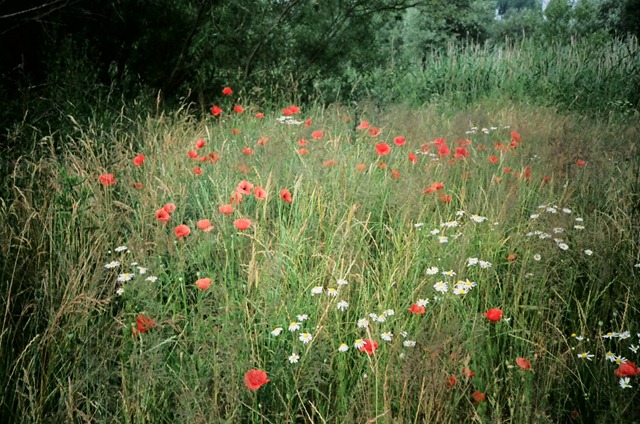
The photo above is my own from 1992; and so is the one below of wild poppies in a field nearby:

33170185-001

The following images are from public websites.

File:Ales stenar bred.jpg

Ale’s stones is a stone ship 67 meters long formed by 59 large boulders of sandstone, weighing up to 1.8 tonnes each. According to Scanian folklore, a legendary king called King Ale lies buried there - the cousin of king Hrothgar of the Old English epic poem Beowulf.

File:Alestenar1777.jpg
Sketch of Ale’s stones by C.G.G. Hilfeling, 1777

“Between the sea and heaven cants the coast
there Ale raised a giant ship of stones,
recumbent where the glare of light dispersed,
in the darkened stillness of the forms reconciles,
a saga obscured shrouded to the tones of the Baltic,
a memorial whose secret alone it conceals.”

Anders Österling (Swedish poet 1884 – 1981)

Ales stenar familj

The stone ship has been restored on two occasions – in 1917 and 1956. The 1917 resoration was probably quite minor compared to the one that took place in 1956.  Major digging and bulldozing work was then carried out without supervision by archaeologists.  A military facility built on the site during World War II had contributed to a state of disrepair. Since the 1980s, several archaeological and geological excavations have been carried out. The stone ship was probably erected between 500-1000 CE; but boulders from older graves in the same field may have been used. More speculative theories have also been proposed to suggest the stones were once used as a solar calendar.

(Info from Wikipedia + Ystad Municipality’s website.)

ABC Wednesday – Round 11 – A

Thursday, 3 May 2012

Toothday

image

You may think it’s Thursday, but to me it’s been Toothday.  I had a visit from the Evil Tooth Fairy last night - the kind that takes your tooth AND your money!

So first thing in the morning I got on the phone to my dentist’s office; only to be told by their answering machine that the whole gang of them were away for education, and won’t be back until Monday.

Somehow that feels typical, although I suppose if I had kept proper statistics over my tooth emergencies over the years, I’m sure I’d find that my dentist has been available more often than not. In fact I’ve had the same dentist for well over 20 years, and I think it has only happened once before during that period that I had to seek help from a different dental practice.

Today however, they were referring emergencies to another dentist/number; and since four days seemed too long to just wait and worry, I took the plunge.

Luckily they were able to fit me in already at 8:40 am, so no complaints about the service. I took a taxi and got there in time. It was an old crown that had got broken off – together with a piece of the original tooth it was attached to. Luckily it was one that already had a root-filling, so no pain. He gave the rugged remains a bit of a polish and put a temporary protective filling on top. So at least now there’s a smooth surface and no sharp edges to cut my tongue on. This will hopefully keep until I can discuss the more permanent solution with my regular dentist.

There will be no steak for dinner over the weekend. 

Picture from http://www.supercoloring.com/

“The folklore states that when a child loses a baby tooth, if he or she places it beneath the bed pillow, the tooth fairy will visit while the child sleeps, replacing the lost tooth with a small payment.” Wikipedia

I can’t really recall any stories about the tooth fairy in my childhood, but I think I did get coins when I lost my baby teeth.  - What about you?

Tuesday, 11 October 2011

Dream Catchers

CIMG3825-4

At the Autumn Market, I came across these Dream Catchers.
I was fascinated by the symbolism (see below), the craft and the colours; so could not resist buying one (or two – one for a friend).

2011-09-24 dream catcher

Originally the dream catcher was a Native American handmade object based on a willow hoop, on which was woven a loose net of sinew strands reminding of a spider’s web. It was then further decorated with personal and sacred items such as feathers and beads.

CIMG3838-1

Native Americans believe that the night air is filled with dreams both good and bad. The dream catcher when hung over or near the bed, swinging freely in the air, catches the dreams as they flow by.

CIMG3825-2

The good dreams know how to pass through the dream catcher, slipping through the outer holes and sliding down the soft feathers so gently that many times the sleeper does not know that he/she is dreaming. The bad dreams not knowing the way get tangled in the dream catcher and perish with the first light of the new day.

CIMG3873-1

Related Posts Plugin for WordPress, Blogger...