Monday, 10 August 2015

The Journey is the Goal – Trollhättan (1)

2015-07-20 thejourneyisthegoal

It’s amazing how long you can make a short holiday trip last, if only you make enough photo stops. (In case you feel you’ve lost track: After two weeks of blogging about it, I’m still only on Day 1 out of 4…)

If our aim had been just to drive straight from where I live to the town where we were to stay the next two nights, we could have done so in about 1½ hour. With all the various stops we made along the way, however, we took about 8 hours getting there…

Map picture

Trollhättan is situated on the river Göta älv. The steep water falls here used to be a huge obstacle for boats travelling the river between Gothenburg and Lake Vänern, until a lock system was built in the 19th century (the present locks still dating from 1916). In the late 19th century, the waterfalls were also “tamed” to produce hydropower, and to make the town a centre for heavy industries as well as for a national energy corporation.

Nowadays, the water is usually only let out into the falls for a few minutes daily in the summer season, as a tourist attraction.

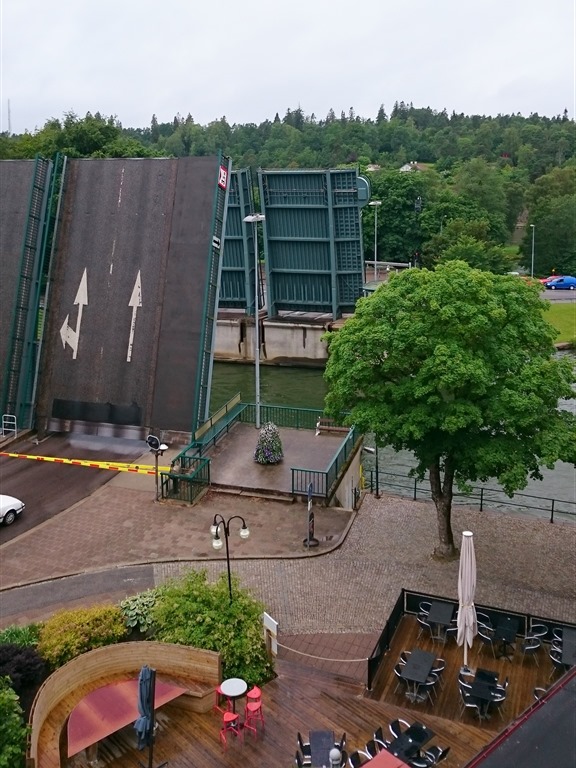
The first view I’ll show you, however, will be the one from my hotel room – which overlooked the bascule bridge across the river/canal:

2015-07-20--21 klaffbron

CIMG5461-001

My room was on the top floor to the left above the restaurant.
zDSC_0226-001

zDSC_0227-001

Linking to Mosaic Monday and Through My Lens

Thursday, 6 August 2015

Summer Evening by the Lake

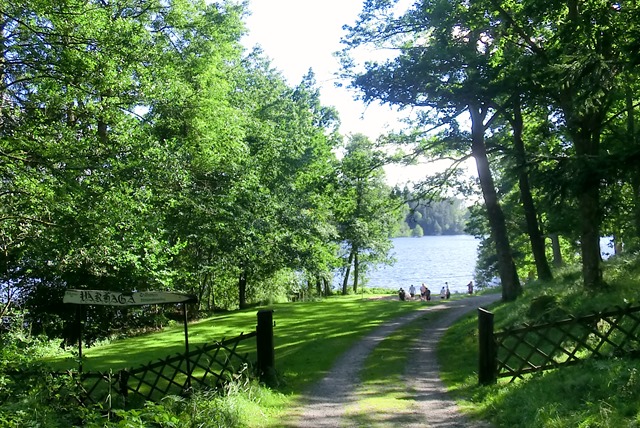
Within ‘bicycle distance’ from the village where I grew up (see my previous two posts) there is a little lake.

Well, at least back in my mid/late teens and in nice summer weather and before I got my driver’s license it was (had to be) bicycle distance - even to the farthest corner of the lake. Up and down a few hills (and kilometres) on the narrow curvy tarmac road towards Town; then turn right into an even narrower dirt road with further ups and downs and curves…

CIMG5317-001

CIMG5319-001

CIMG5318-001

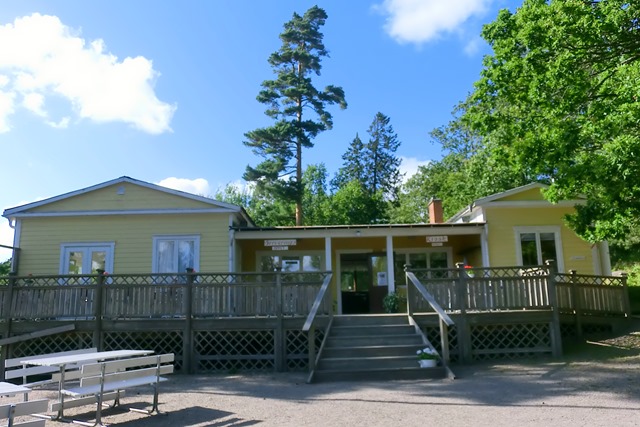
… and this is where you eventually end up: A small summer camp/café/hostel kind of place, owned by one of the ‘free’ churches in town. I was curious to see if it still looked the same (after 40 years). And except for a few minor changes and modernisations (like a larger deck along the front, and WCs in the old outhouse), it pretty much did. Including a group of teens still playing beach volleyball on the lawn.

Good Fences
Friday My Town 

Wednesday, 5 August 2015

Old Cotton Mill

2015-07-20 Sjuntorp mill

Map picture

The cotton mill at Sjuntorp near Trollhättan was the second mechanical cotton spinning mill to be built in Sweden, back in 1831. Accoding to a Swedish Wiki article about it, the factory had its heyday in the 1940’s, when it employed about 1200 people. I’m not sure how many workers there were in my childhood back in the 1960’s; but I do know they were still employing new people then, as several of my classmates had parents working there, and some of them came moving here from other countries in Europe (mostly Finland).

I think it was in the 1970’s that the situation for the textile industriy deteriorated, and many textile mills all over the country had to close down (with production being moved abroad, where labour was/is cheaper).

CIMG5294-001

Nowadays the factory premises here seem to be shared by a variety of businesses – and only one of them a small textile company.

CIMG5297-001

In my childhood, across the road from the factory there was a grocery shop and a post office; and I think also a kiosk in the square in front of the factory entrance. Now there’s a pizza house and that seems to be It. (The car parked in front looks like it might have been cruising around the village ever since the Kiosk times, though.)

No pizza places back in the 1960’s – but at the end of the village where we lived back then, there were two more grocery shops (one co-op and one private), plus a butcher’s, a bakery, a watchmaker’s shop, a newspaper kiosk, a community centre with a cinema (Sunday matinés), and even a police station. (Nowadays there’s one grocery shop.)

CIMG5303-001
Neat big old wooden house close to the factory.

CIMG5301-001
Peaceful view looking the other way along the river.

CIMG5298-001
Old fire-station (1930).

CIMG5310-001
This quirky house half way up the hill was built around 1900 as Memorial to a deceased factory director (whose widow donated the money); and to serve as community centre for the factory workers back then, with dining hall, reading rooms etc. Nowadays it’s a B&B (but we did not stay there).

Back in my childhood, to me the factory was just a factory was just a factory (repetition intended!)… I never gave it much thought. Nowadays though, when I look at old industrial buildings like this from a century or more ago, I’m struck by how much pride and optimism is shown in the details of the architecture; with lots of purely decorative details in the brickwork, frames of door and windows, chimneys and towers etc. (Compare for example that flat pizza house building…)

Outdoor Wednesday

Sunday, 2 August 2015

A Church for Shadow Shot Sunday

CIMG5289

CIMG5291

CIMG5288

CIMG5290

CIMG5292

CIMG5293-001

This is the church in the village where I grew up (Sjuntorp near Trollhättan). It’s a rather scattered kind of village, lacking a proper centre – even more so these days than back in the 1960’s, when the cotton mill (founded in 1831) was still flourishing. (I’ll get back to the mill in a later post.)

The church has been standing on its hill overlooking the little river and valley and surrounding rural landscape since long before the industrial revolution, though – 800 years or so. The earliest documents mentioning it are from 1338, but the church itself probably originates from around 1200. It has of course been reconstructed and refurbished several times through the centuries. The tower for example was added as late as 1952. (As that was before I was born, to me the church looks just like it ‘always’ did, though!)

It was on a Monday that we happened to be passing, and the church was not open (nor did I expect it to be).

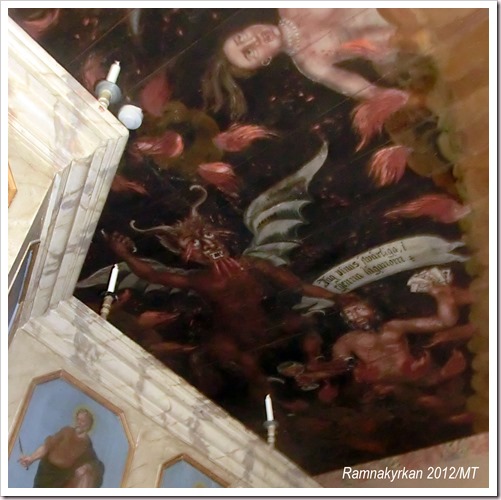
My family weren’t active church-goers; but until the year 2000 the Church of Sweden was a state church, and back in the 1960’s, it was still customary for most children to get confirmed in the church at age 14. So that year at least I did visit the inside of this church on a number of occasions; and I remember spending quite a lot of time staring up in the painted ceiling.

I also had a school teacher back in my teens who loved to tell the story of how the restoration of this church in the early 50’s caused headlines in the local newspaper. The question was: “Will the church be allowed to move Hell?” – and the answer, when the authorities had made their decision: “Church permitted to move Hell!” “Hell” in this case was a certain part of the old painted ceiling. Because they were extending the whole longhouse of the church, they wanted to move the devil and his whatnots a bit - as it did not seem proper to have them hovering in the middle of the church.

For some reason, in the past, scenes from hell (or doom paintings) were not uncommon at the far back of the church though, near the entrance/exit. (Perhaps to remind people as they went back out into the world, “to be careful out there”?)

Below is a photo of mine from the old church in the museum park here in Borås. If memory serves me right, I think the paintings in my childhood village church were rather similar:

CIMG9479-001 Ramnakyrkan2

Linking to Shadow Shot Sunday 2

Saturday, 1 August 2015

Castle Ruins – Gräfsnäs (3)

CIMG5225-001

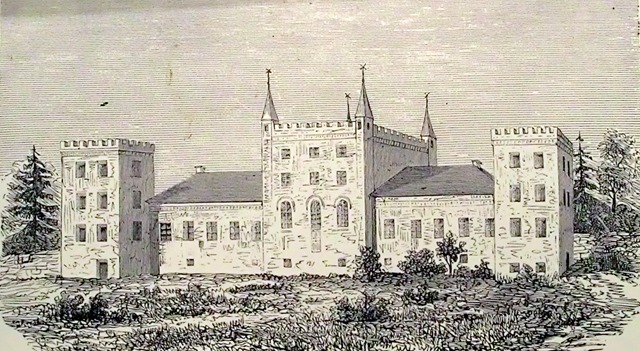
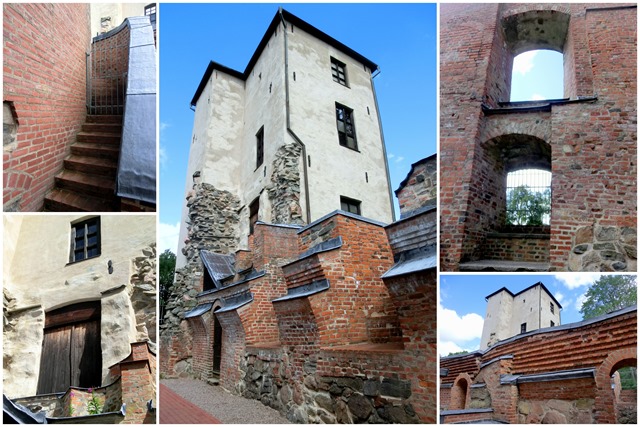
Gräfsnäs Castle (or Castle Ruin) today consists of an only partially restored ruin surrounded by a dry moat. Once upon a time though, this was a palatial fortress in Swedish-French Renaissance style, oringinally built in the mid 1550s.

The castle was burnt to the ground three times: 1634, 1734 and 1834; and after the last fire it was never fully restored again.

CIMG5227-001

One old tale says that the fires were predicted already in the 1500s by a woman with reason to hate the family who owned the estate back then. She cast a curse on the place and said that it would burn three times, and after that remain derelict – which all came true…

File:Suecia 3-052 ; Gräfsnäs.jpg
Image of the castle drawn by Erik Dalbergh in the late 1600s.
(from
Wikimedia)

CIMG5234-001
The castle before the last fire in 1834.

CIMG5243-001

CIMG5250-001

CIMG5231-001

2015-07-20 Gräfsnäs

CIMG5232-002

2015-07-20 Gräfsnäs1

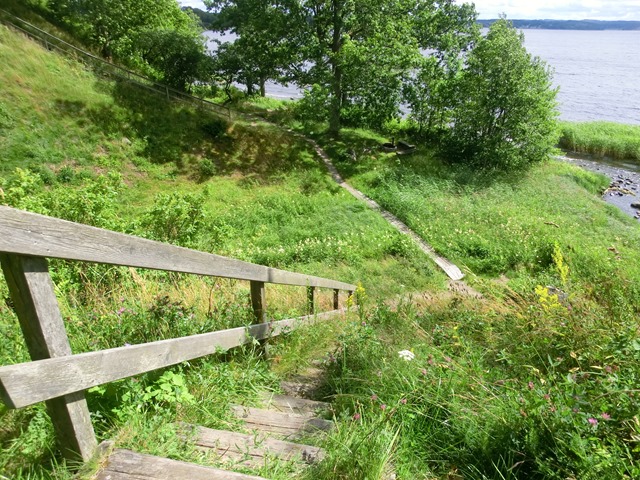
The castle ruins are beautifully situated on a hill overlooking the lake Anten.

CIMG5258-002

CIMG5256

(I did not walk down/up these stairs…)

CIMG5260

2015-07-20 Gräfsnäs2

Finishing off our visit with tea/coffee at the modern café, also overlooking the lake.

Related Posts Plugin for WordPress, Blogger...